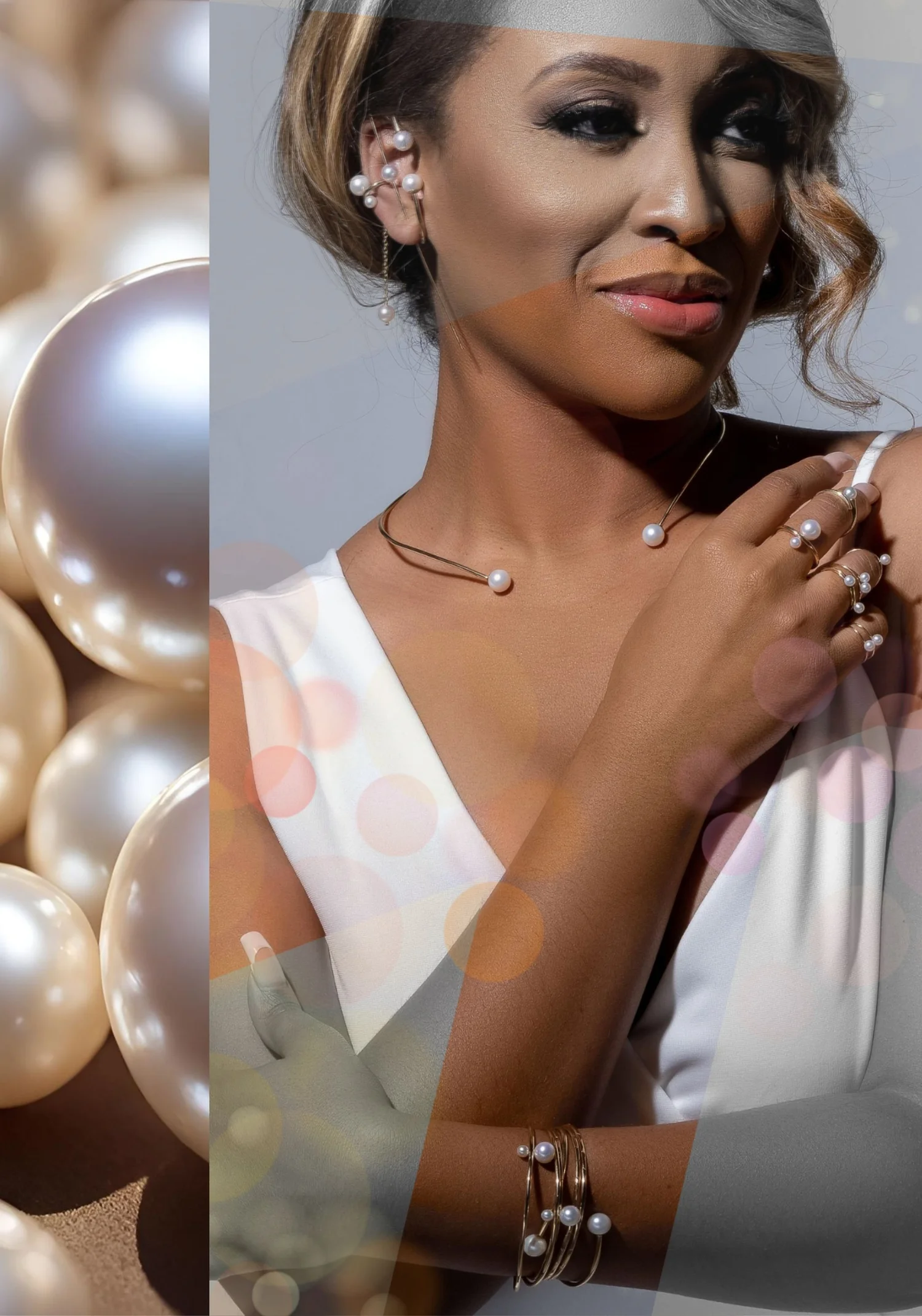
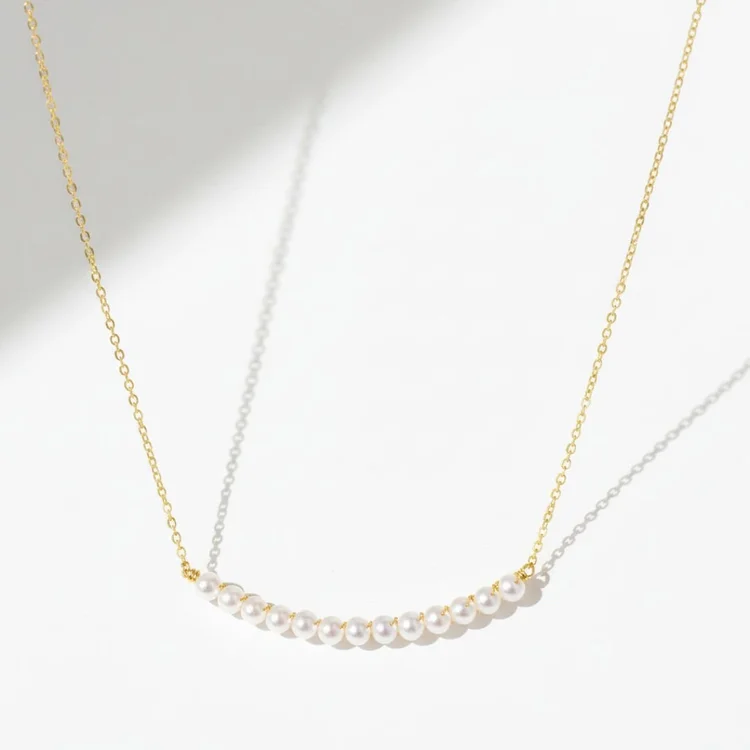
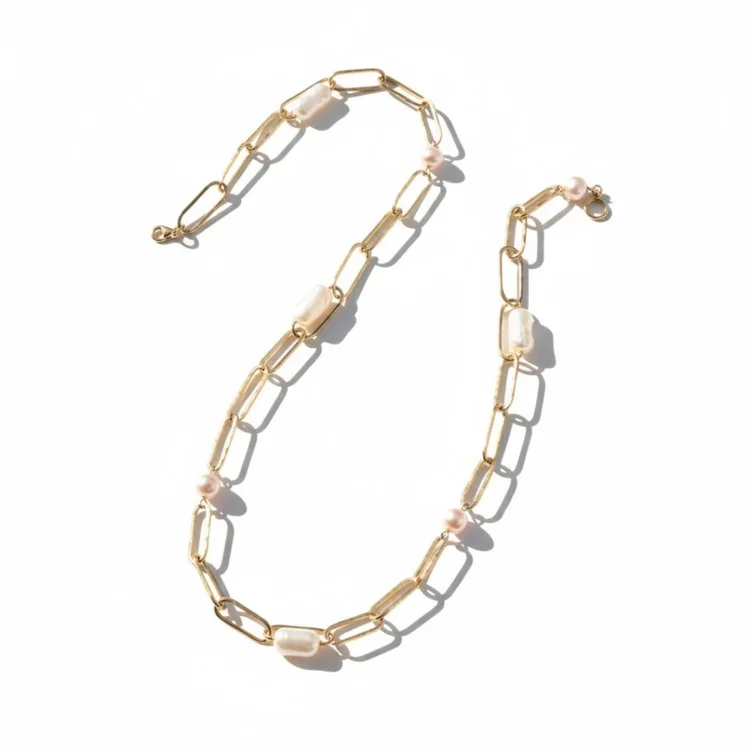
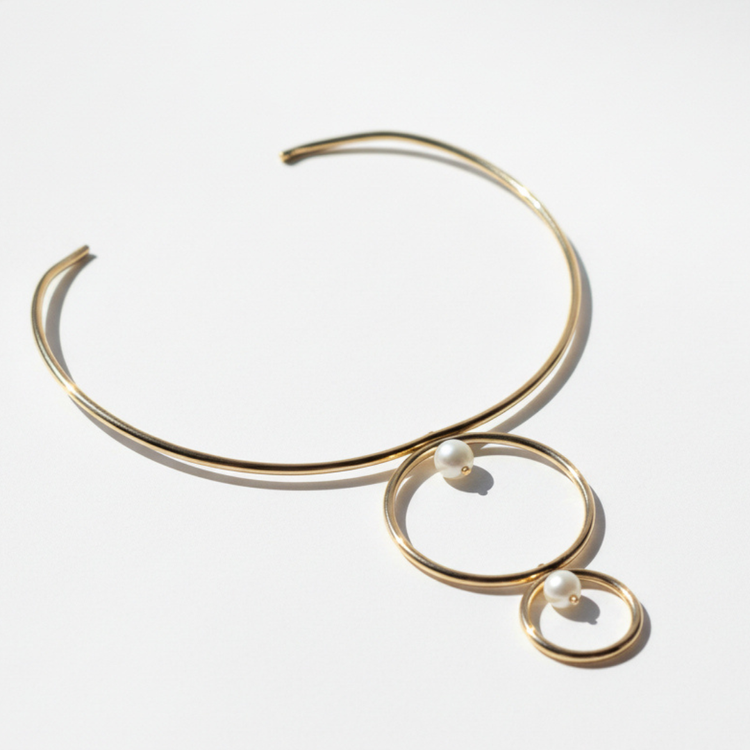
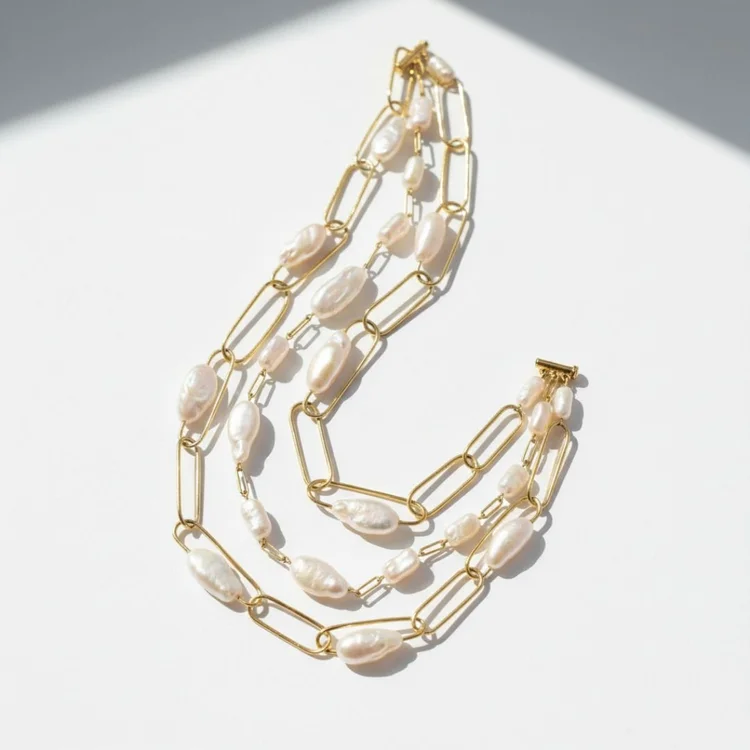
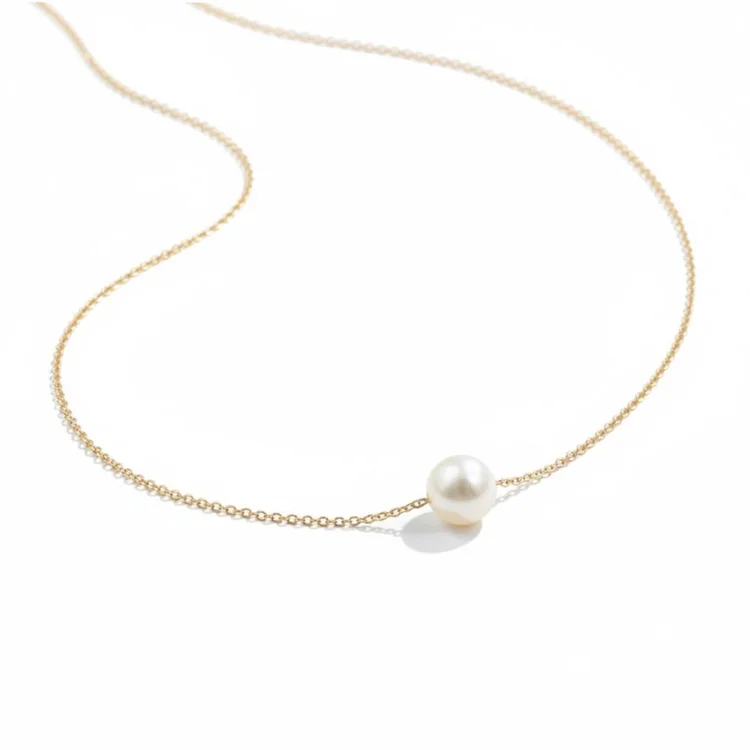
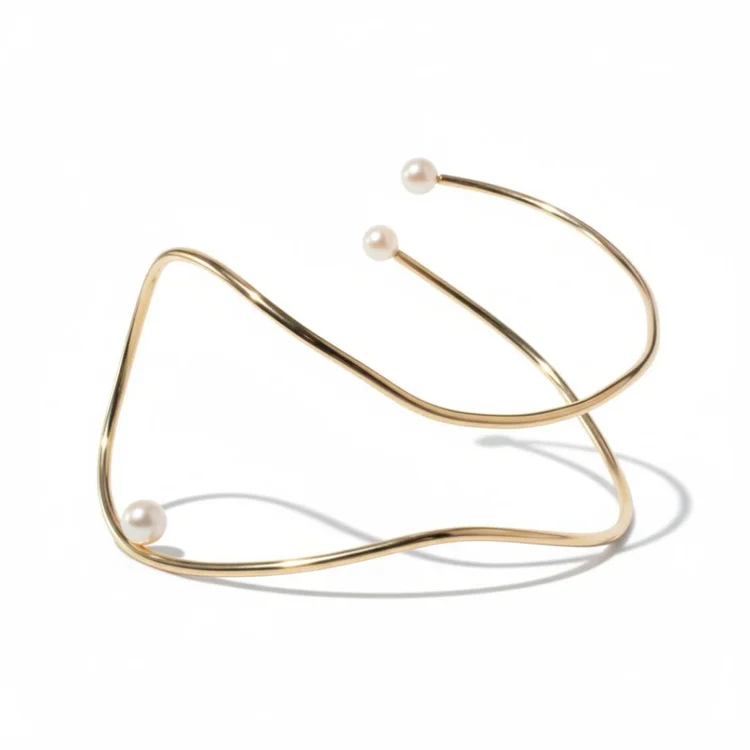
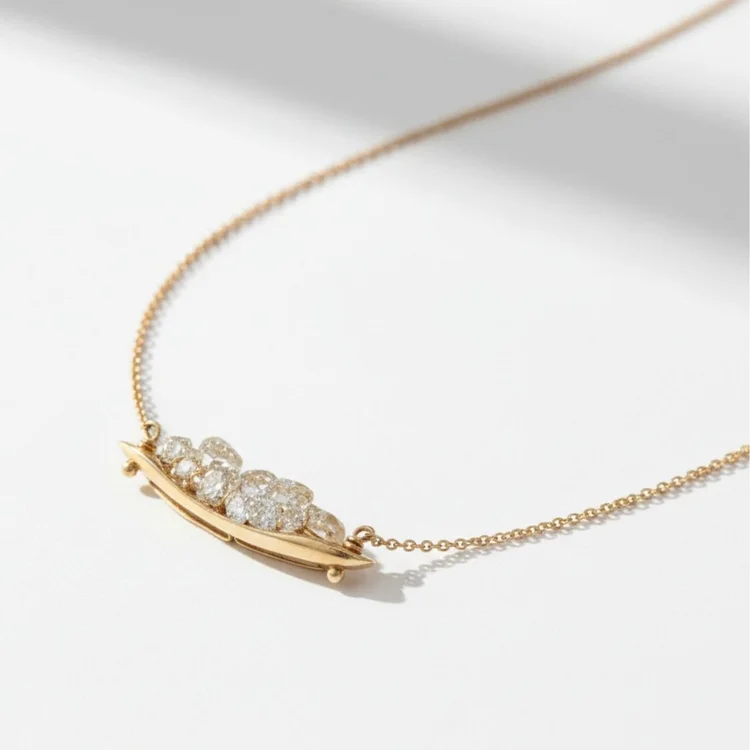
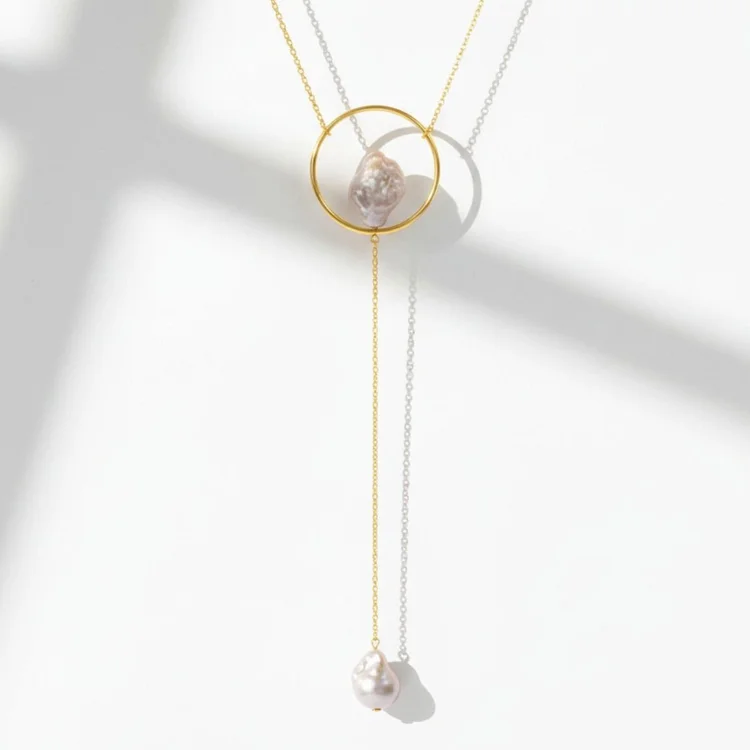
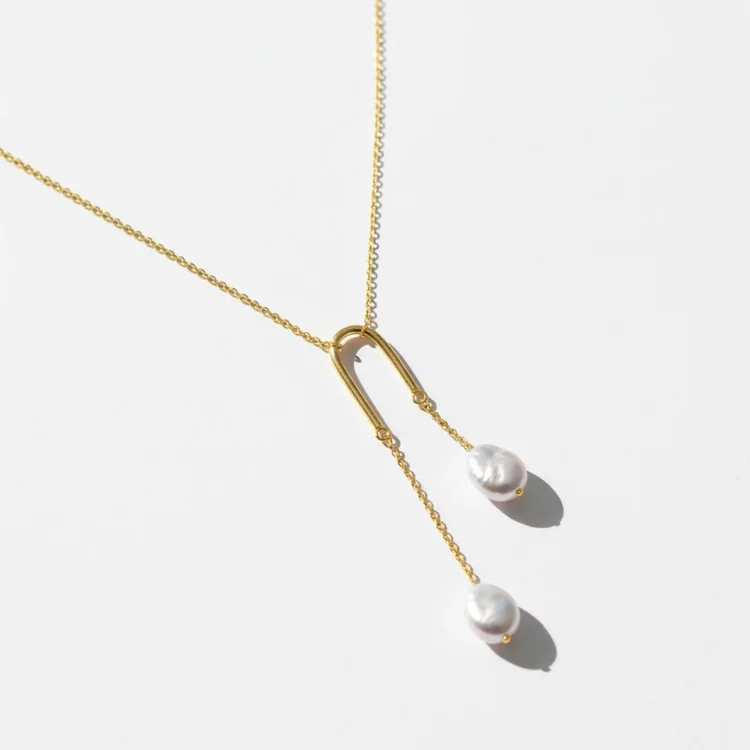
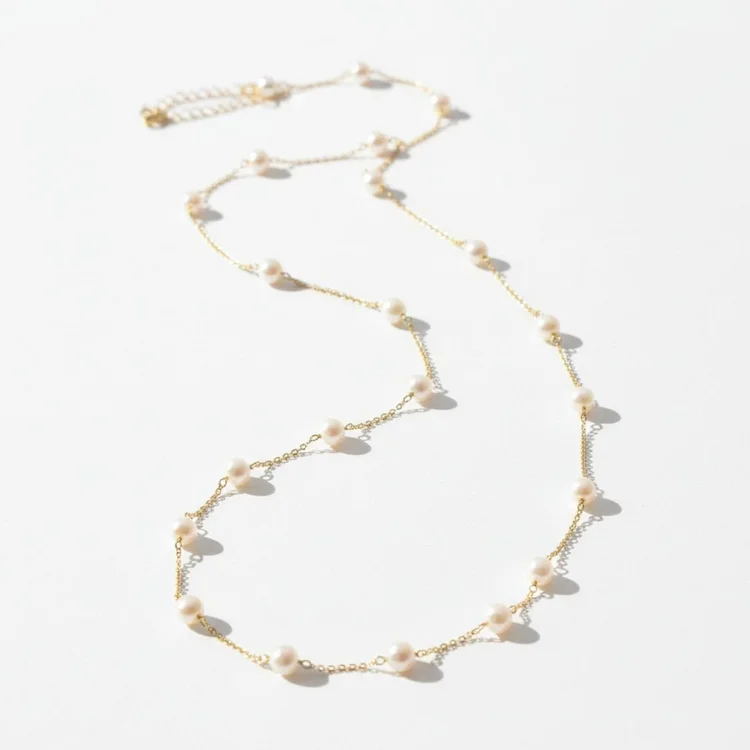
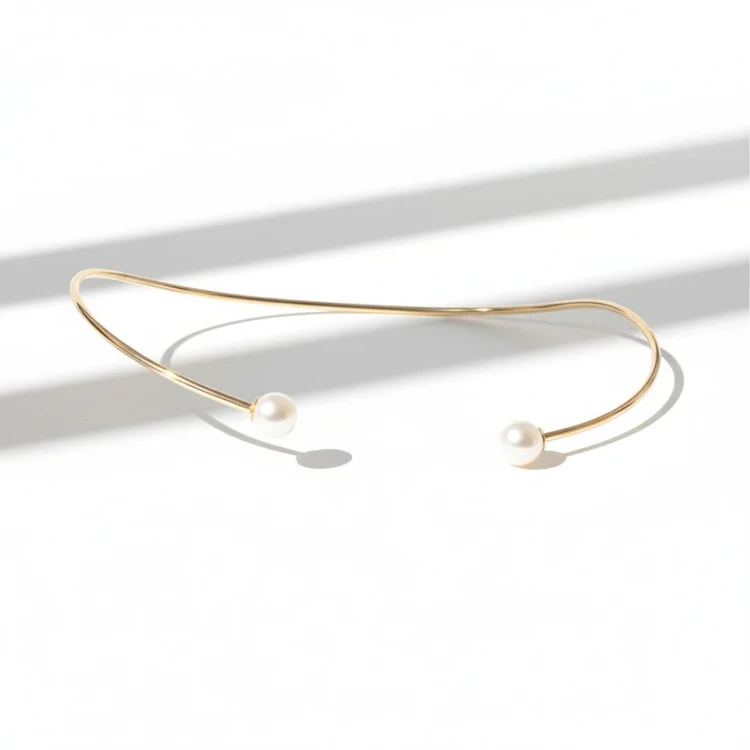
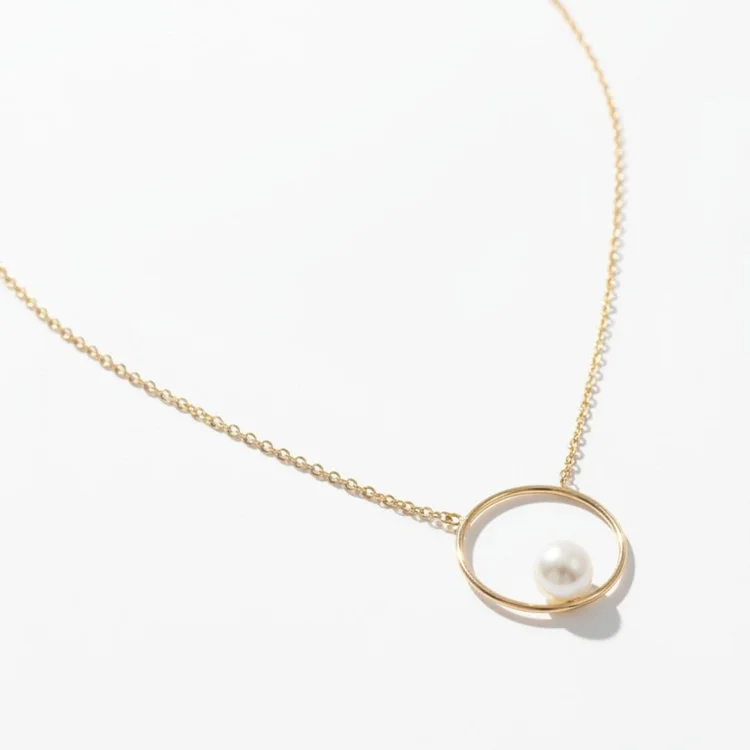
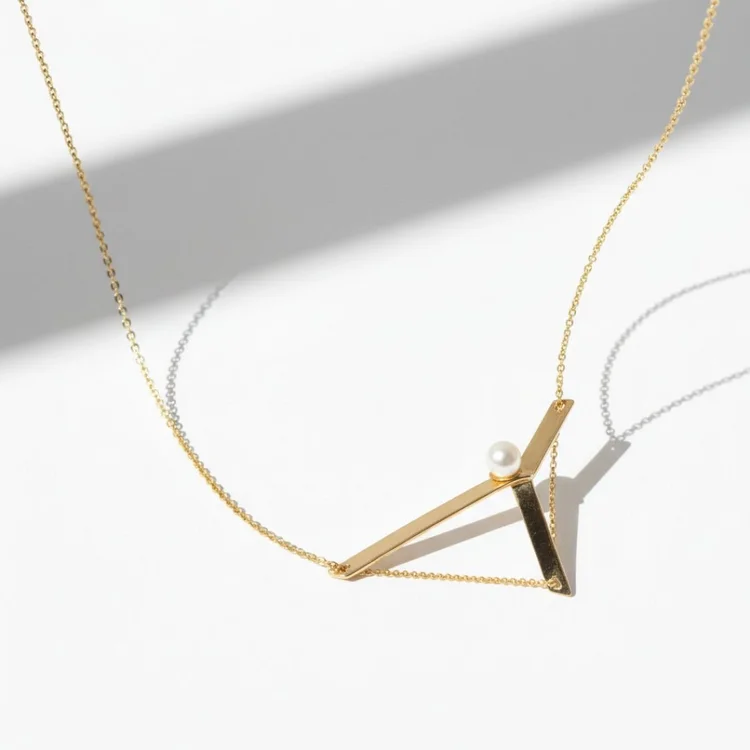
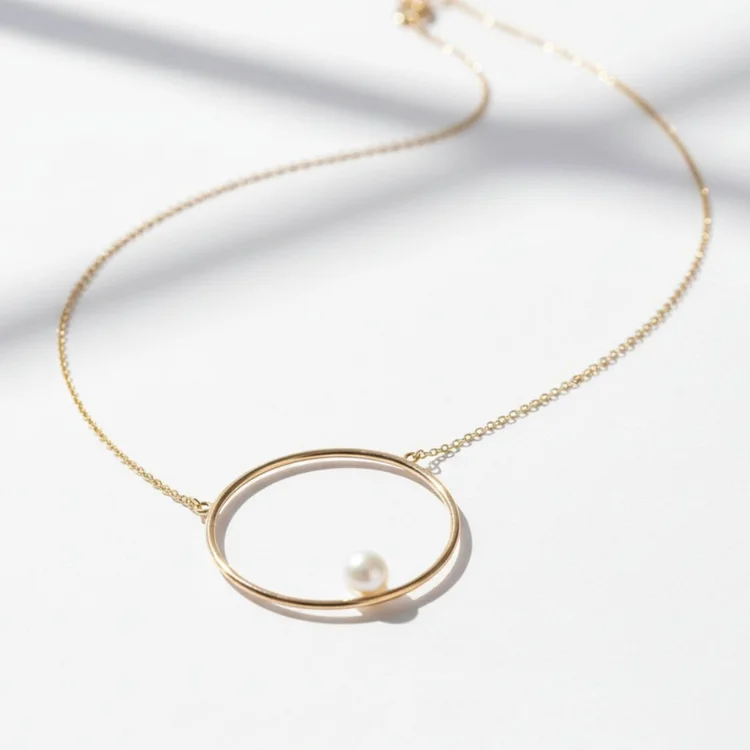
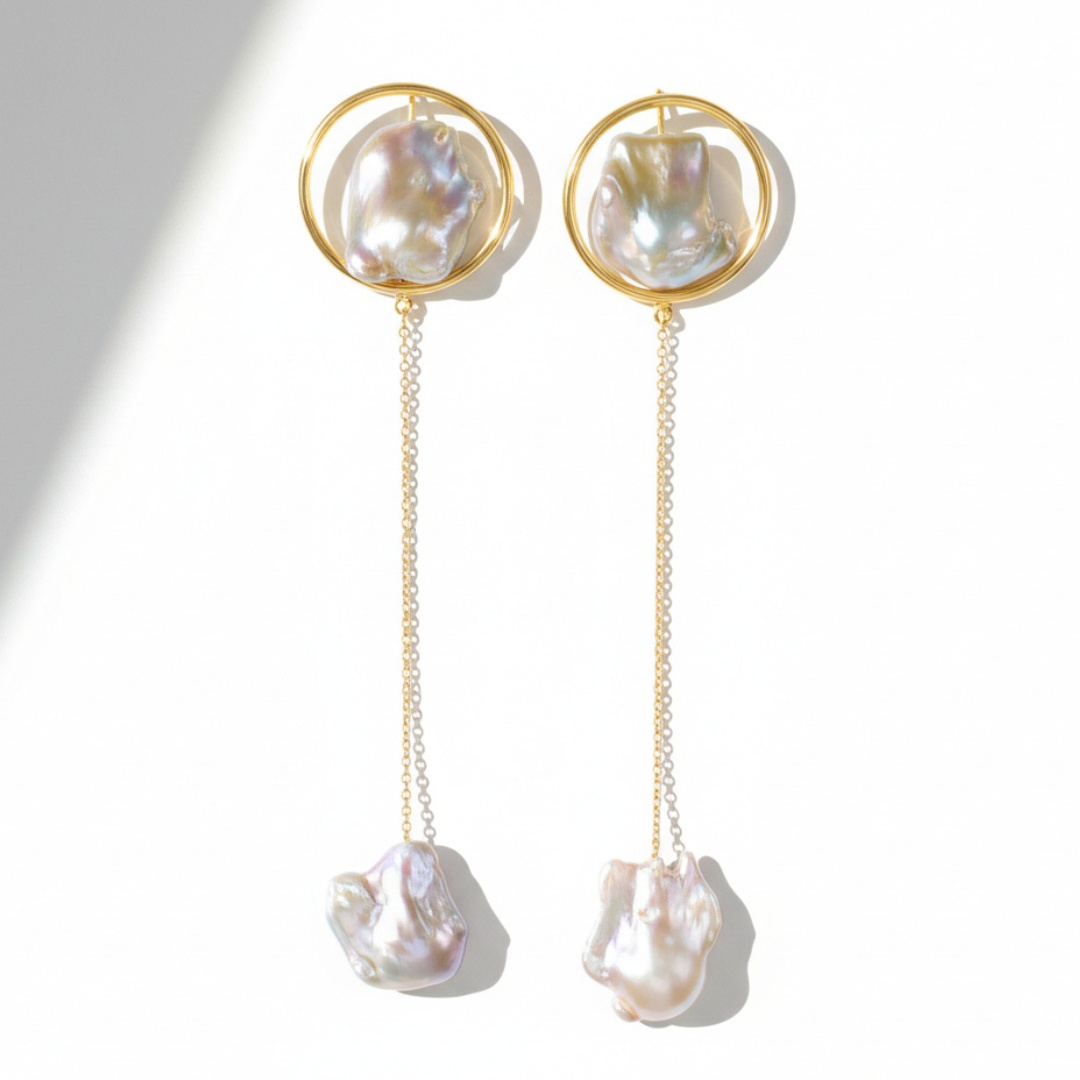
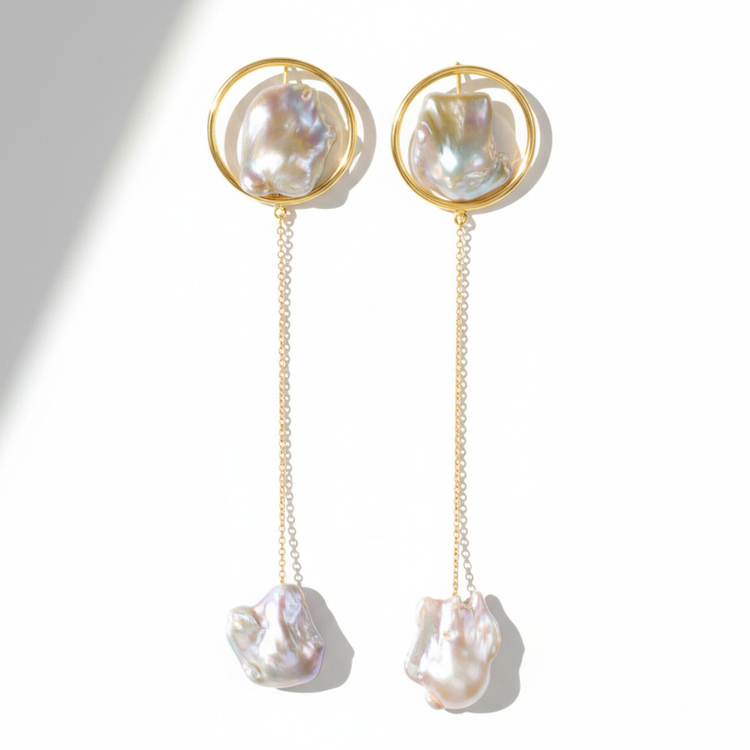
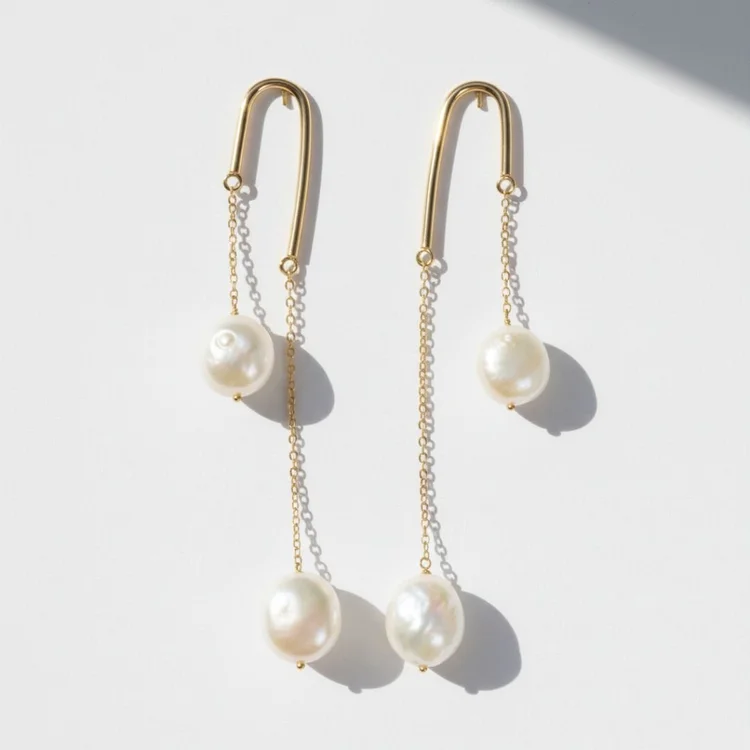
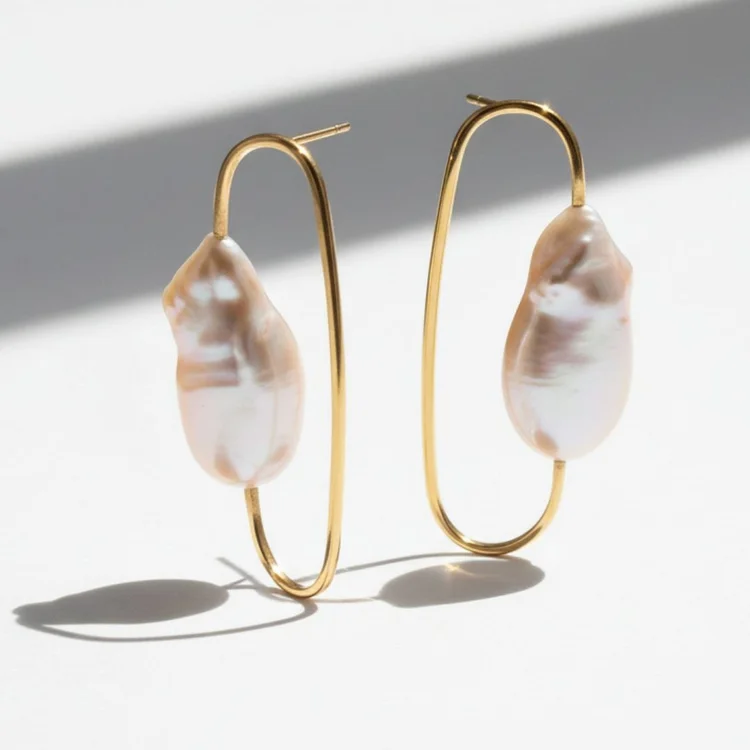
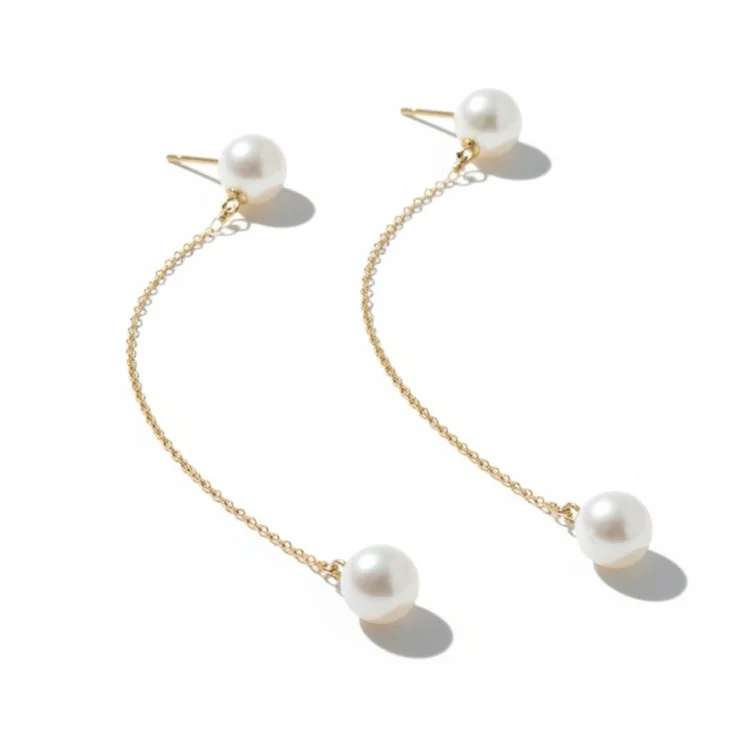
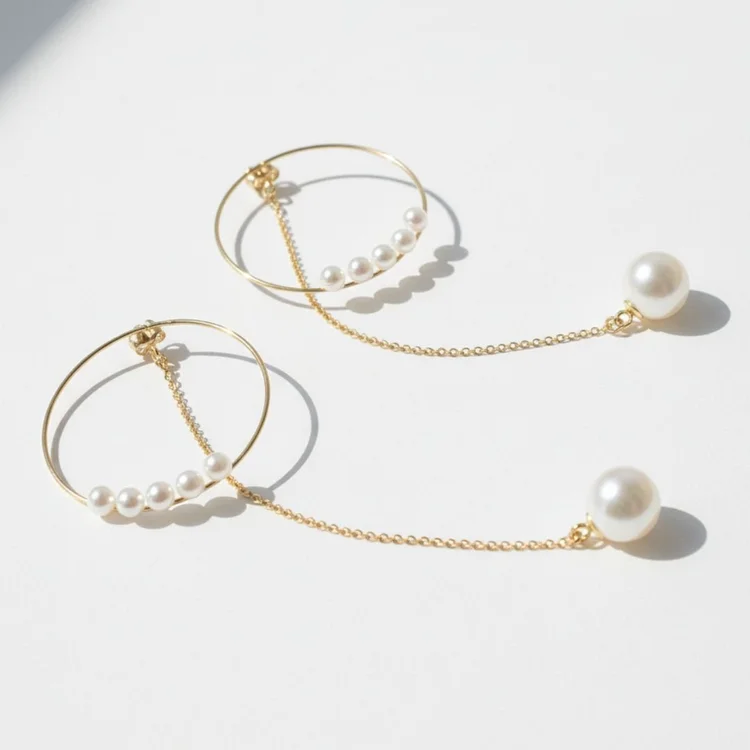
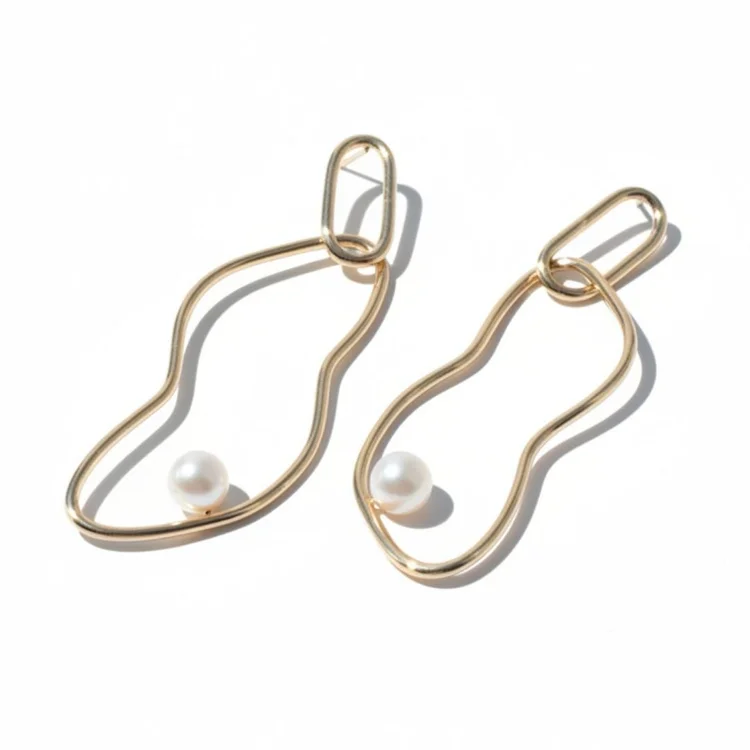
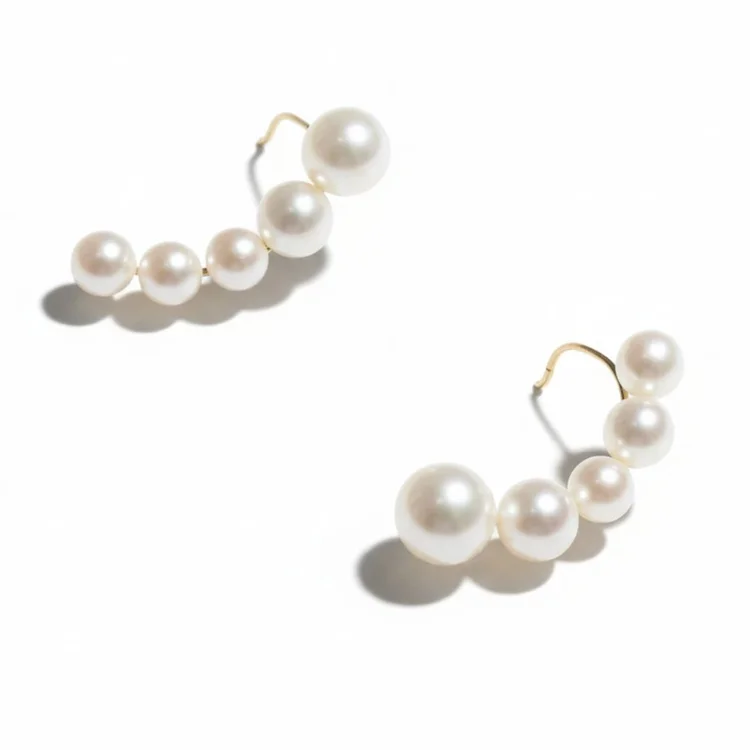
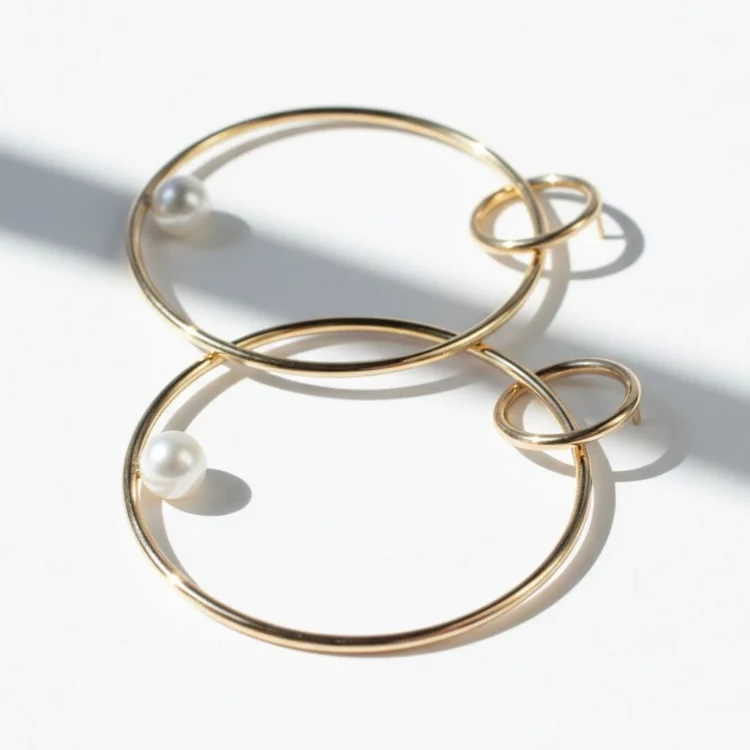
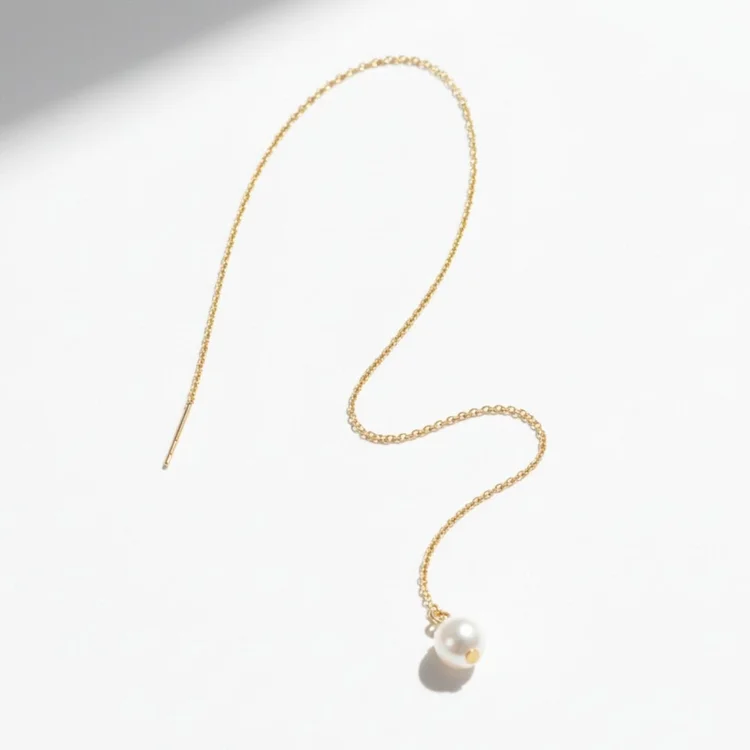
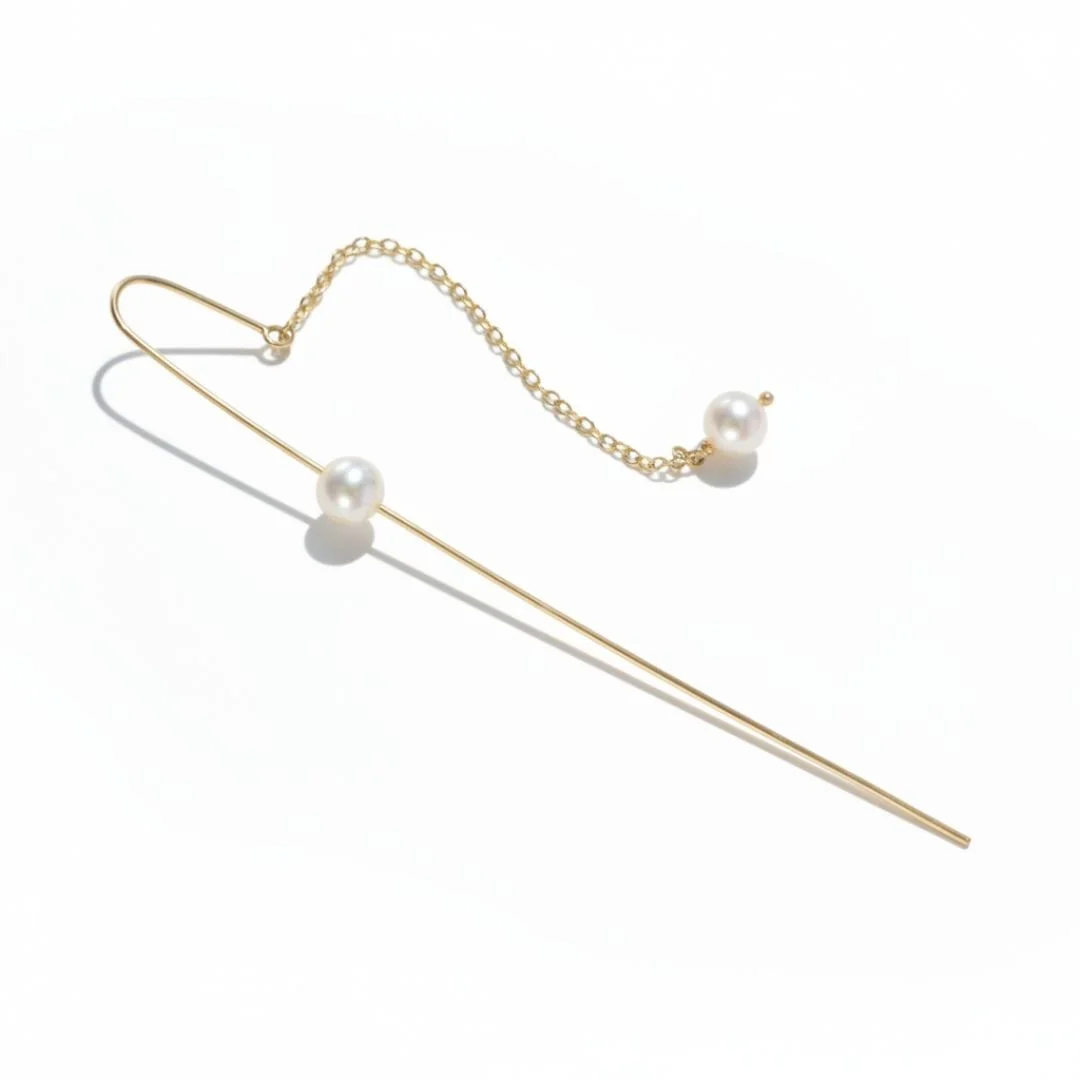
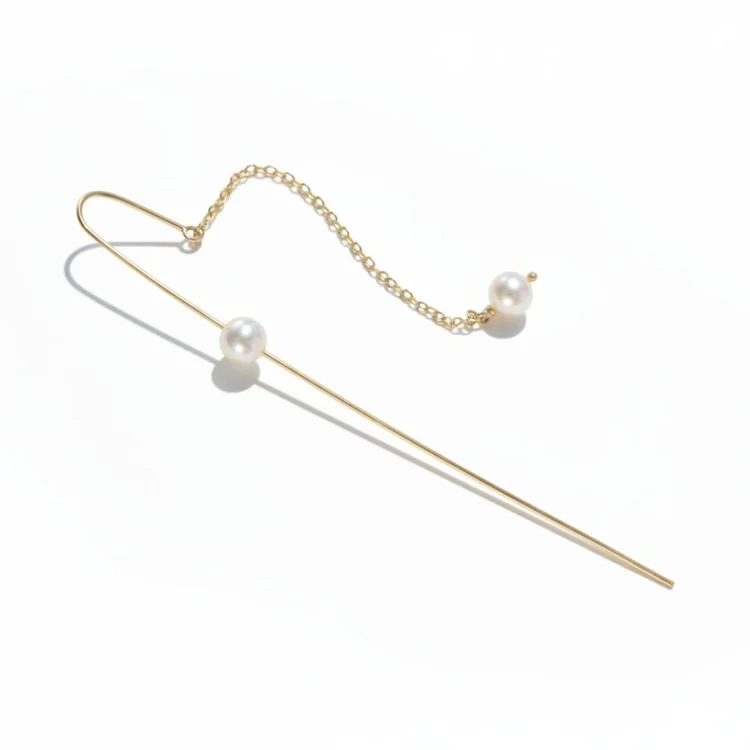
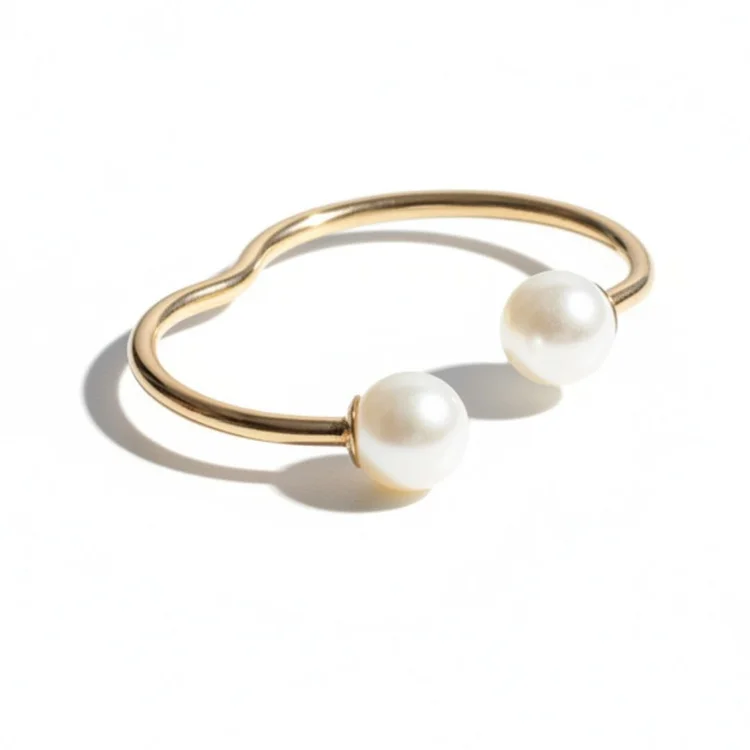
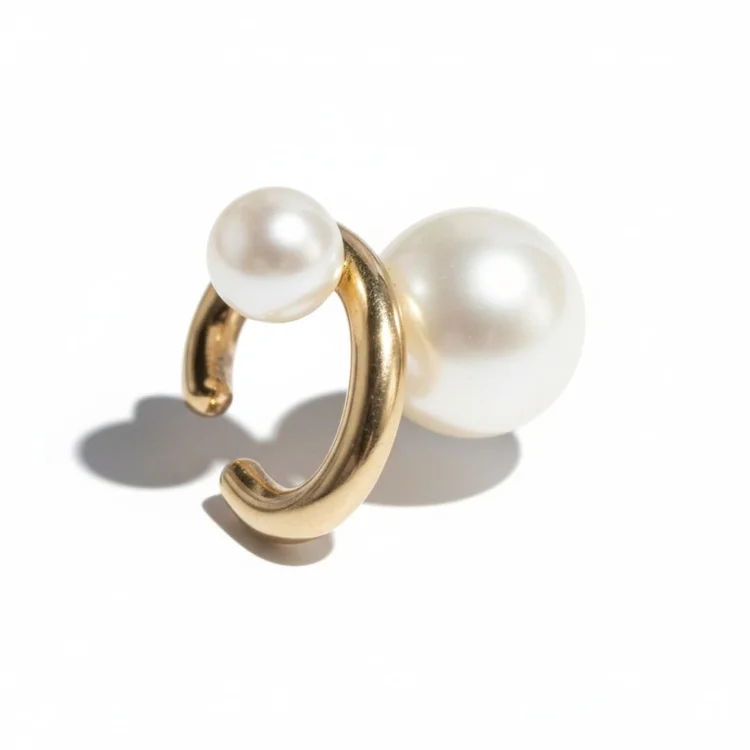
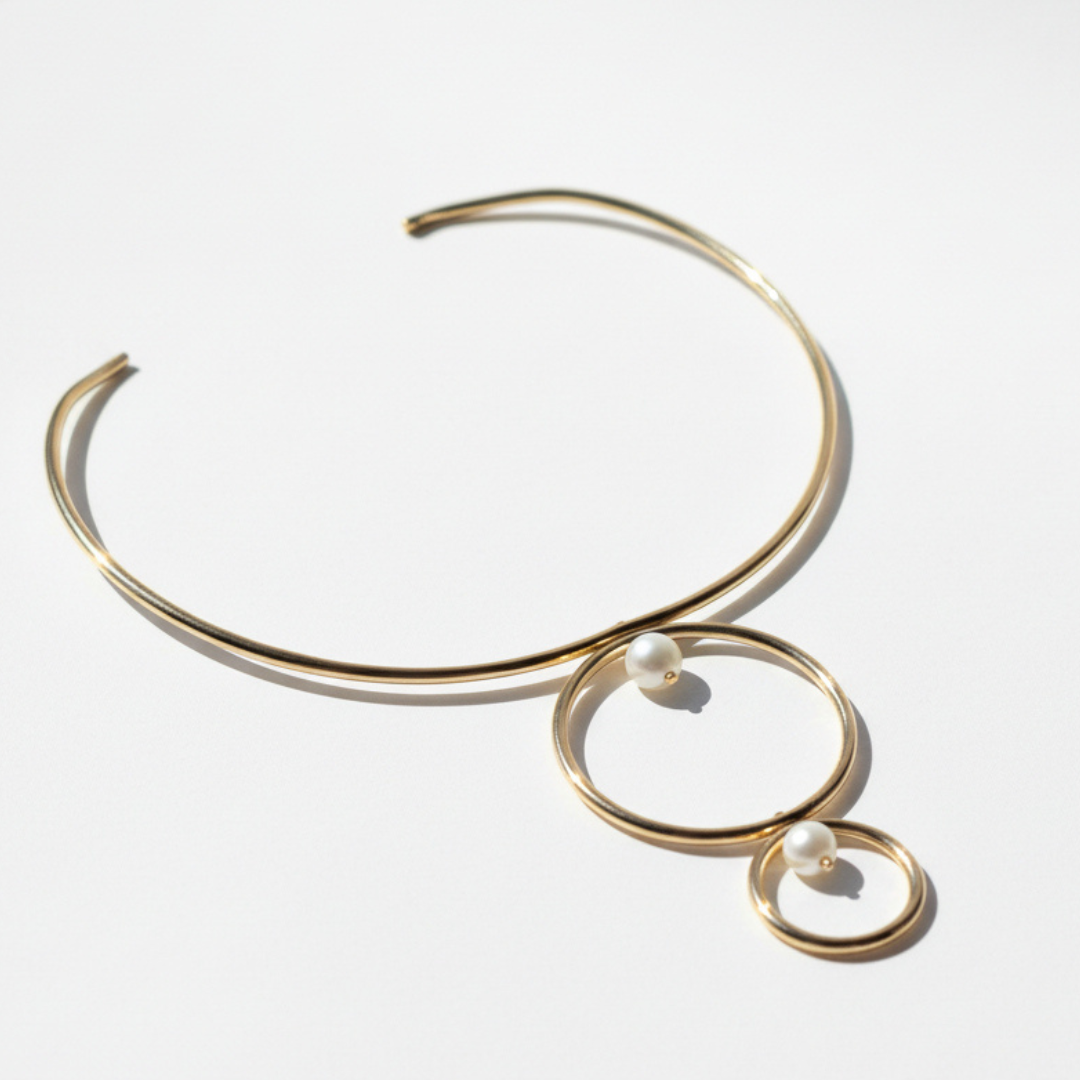
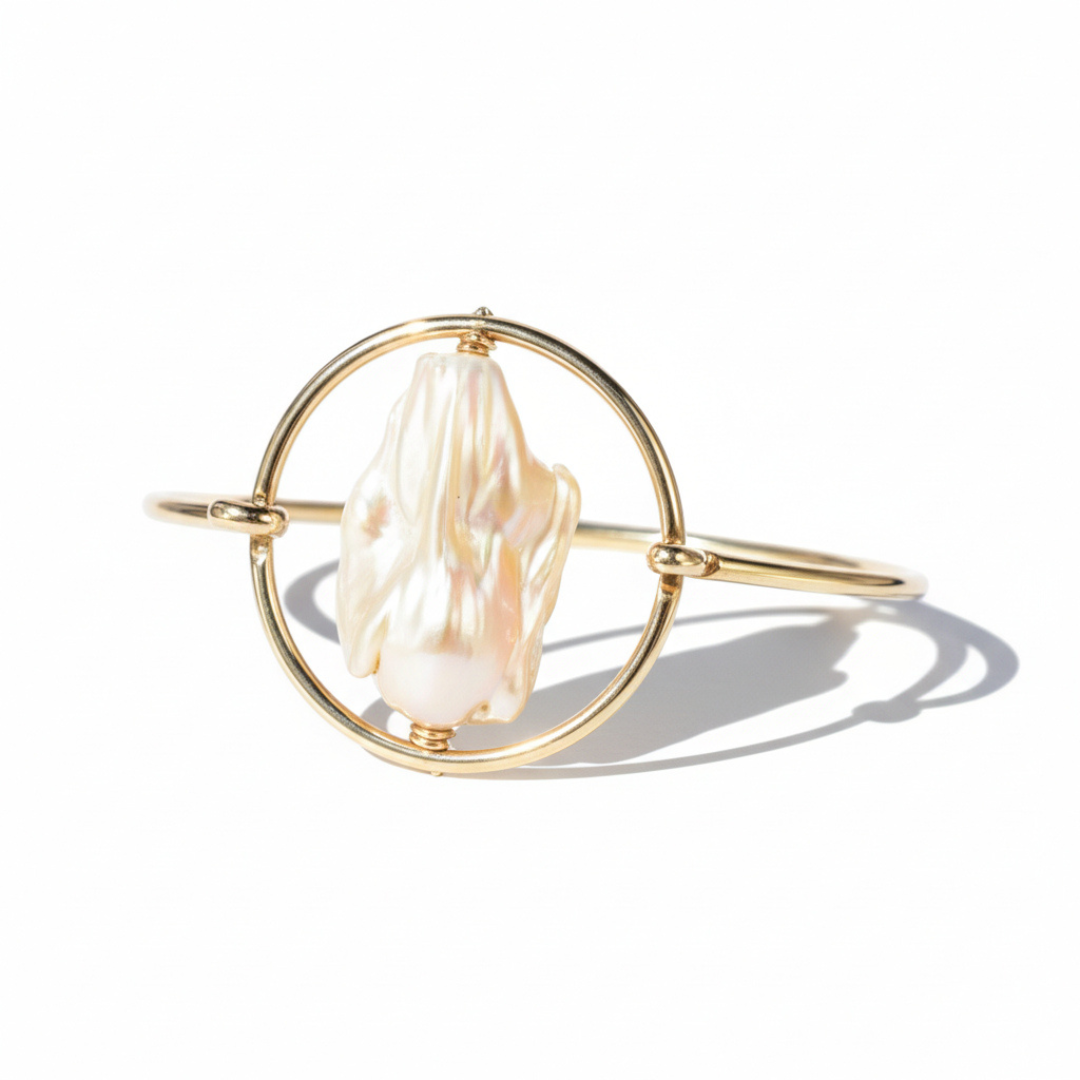
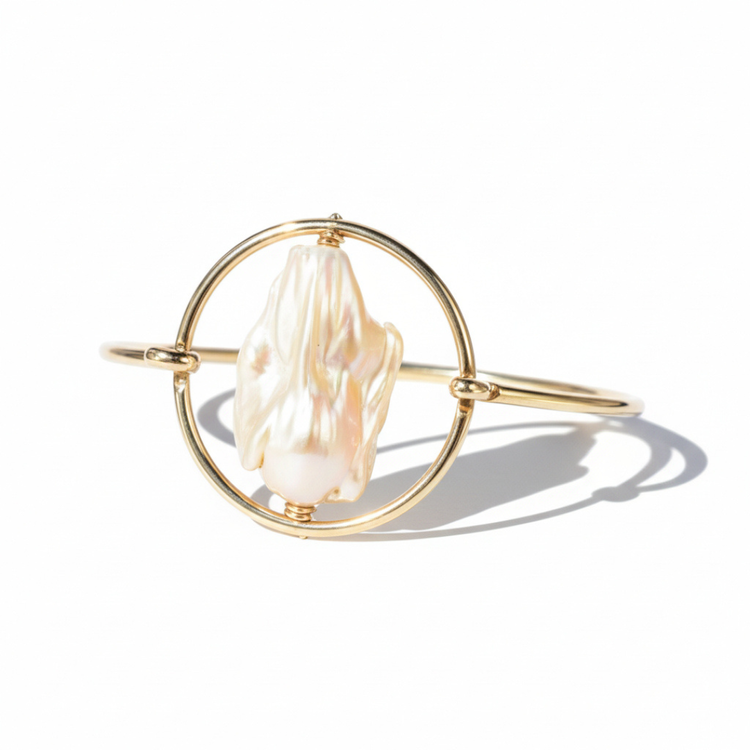
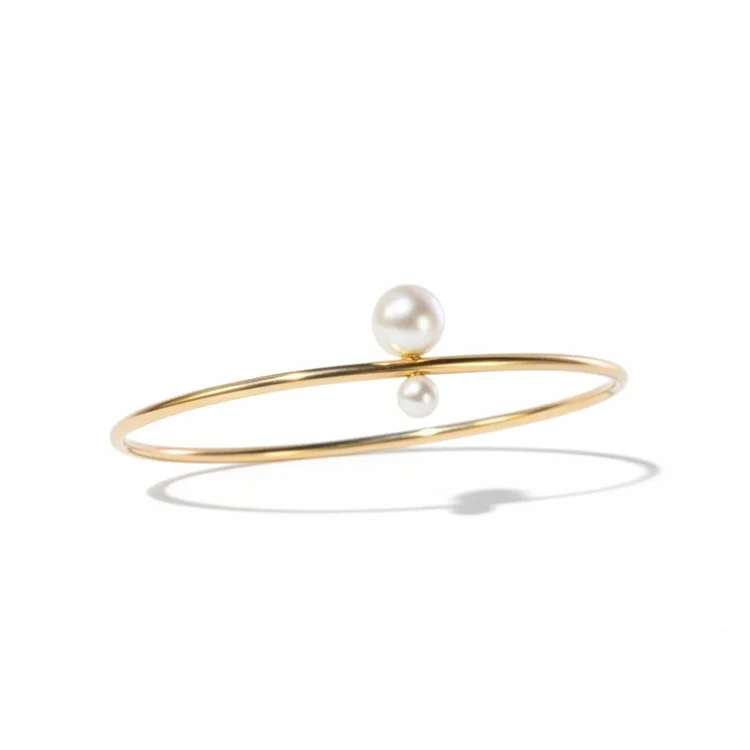
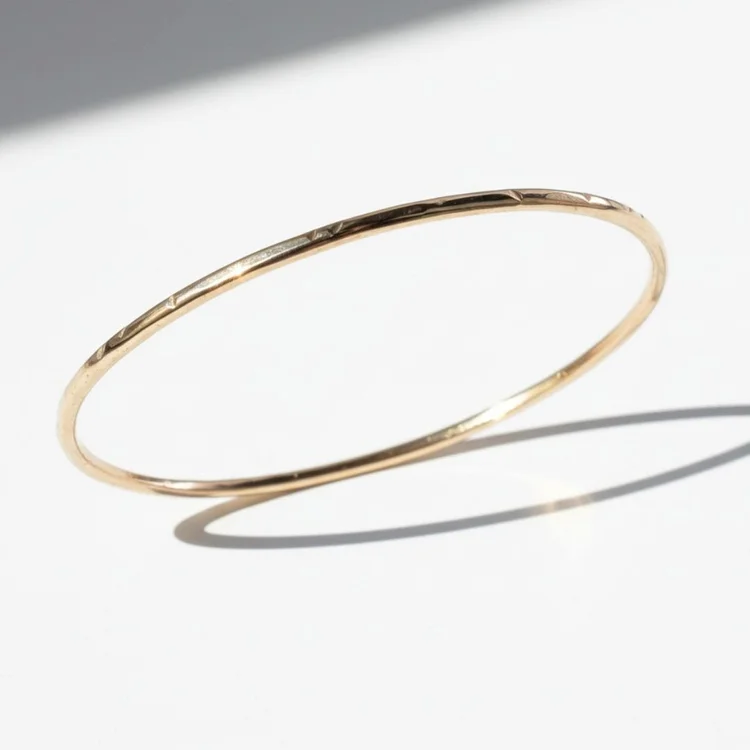
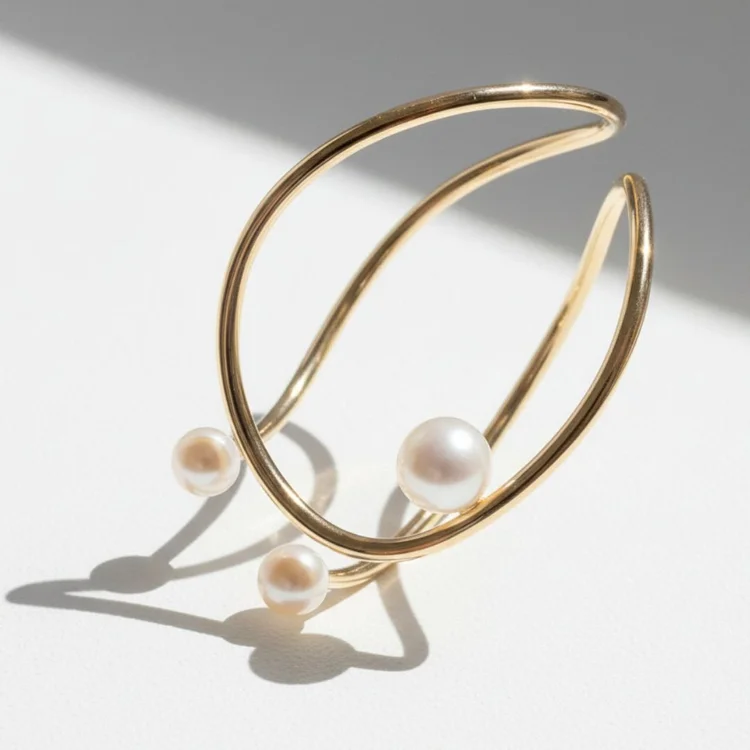
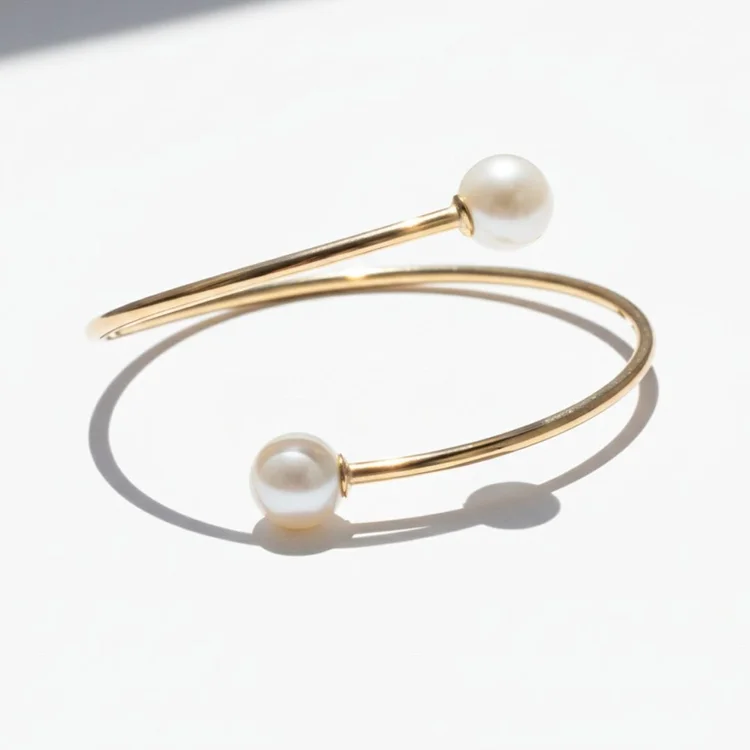
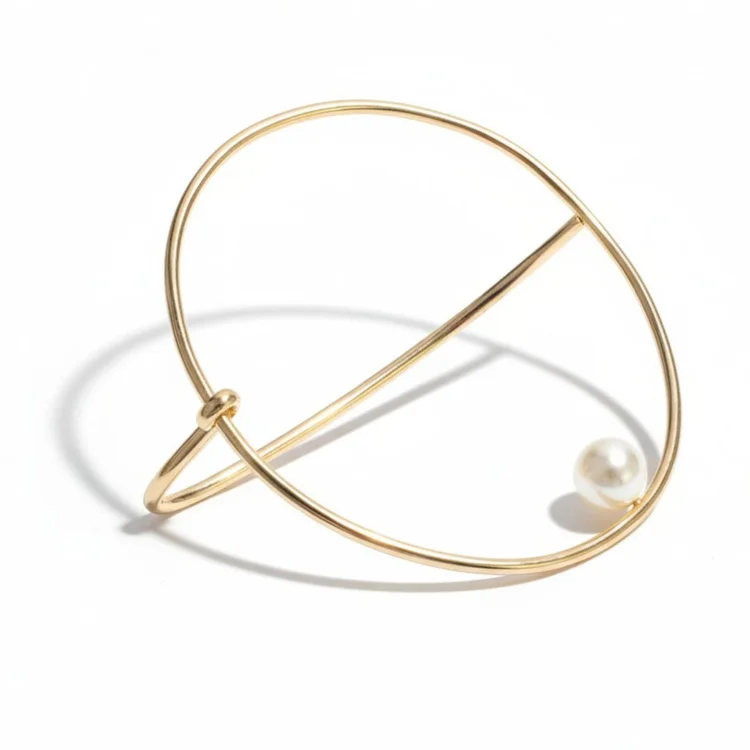
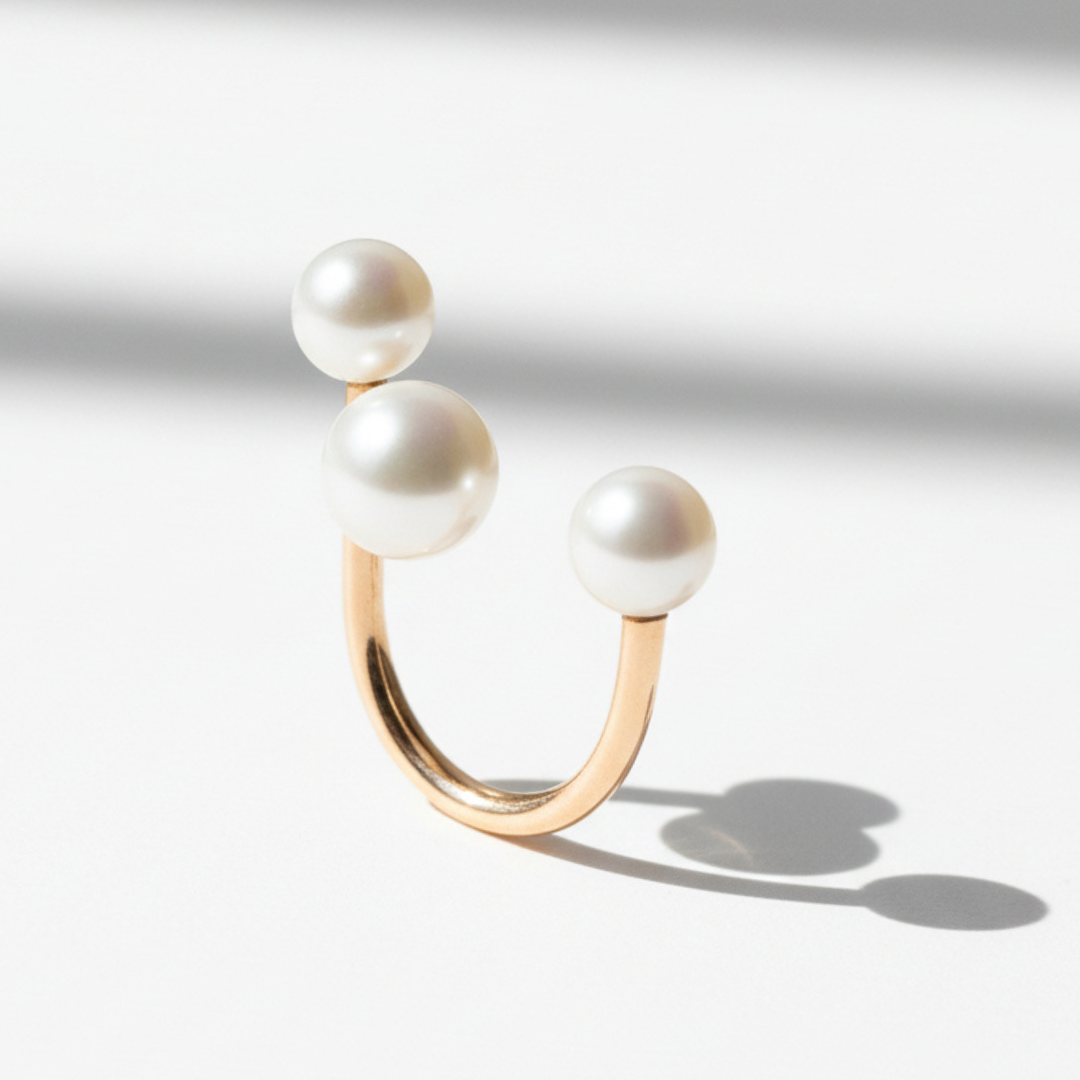
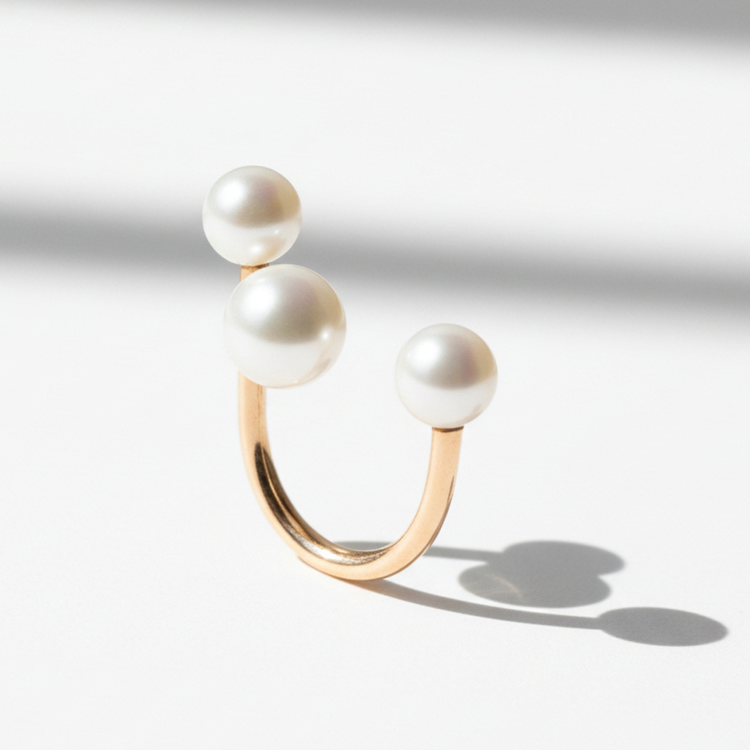
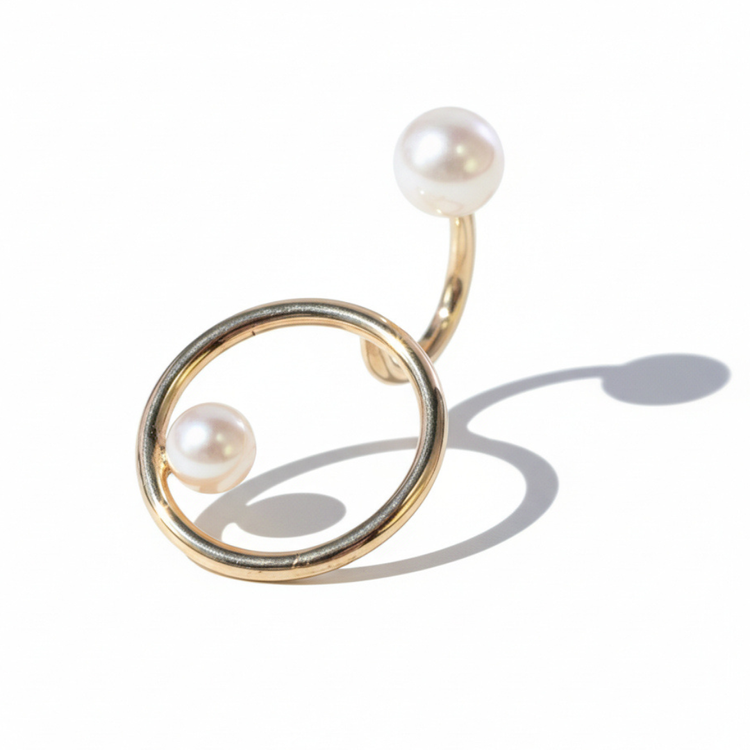
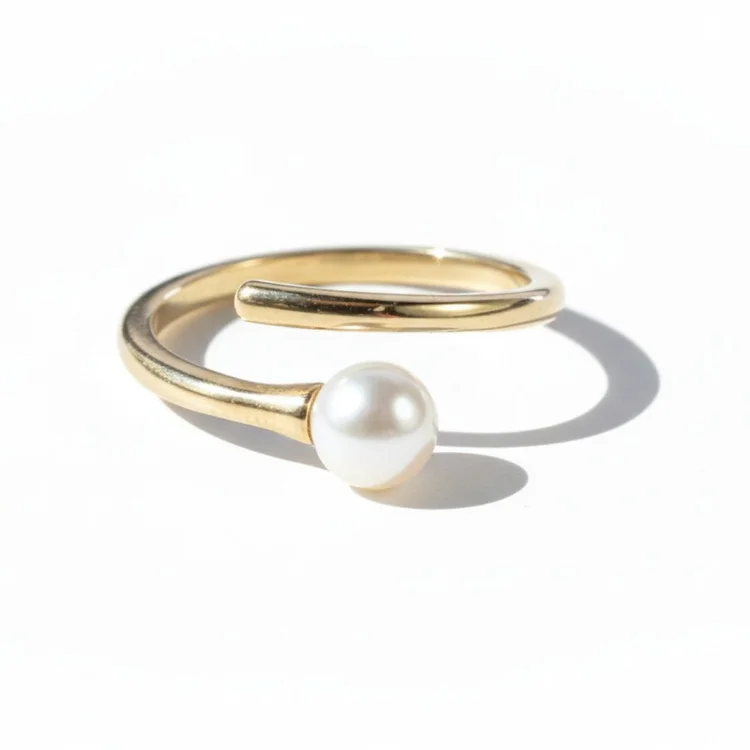
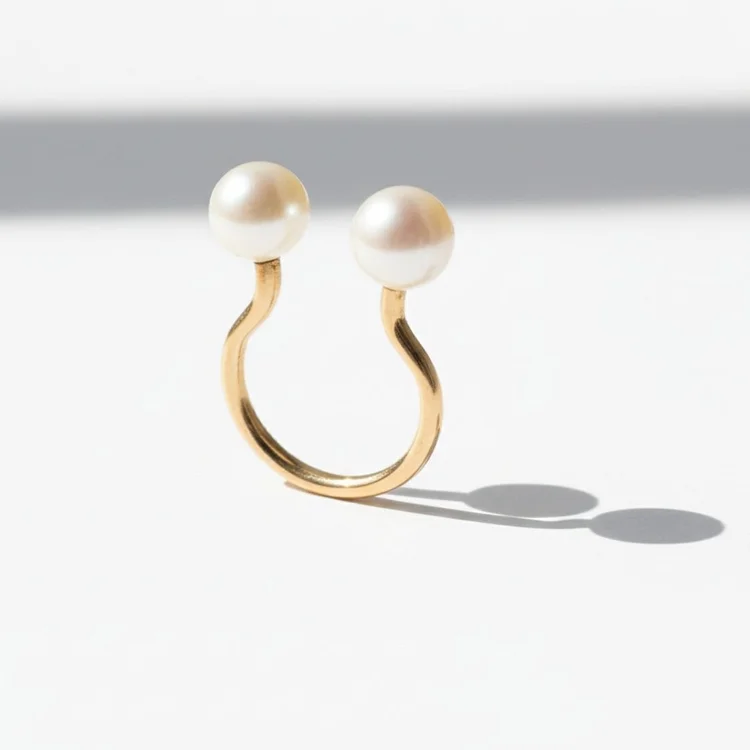
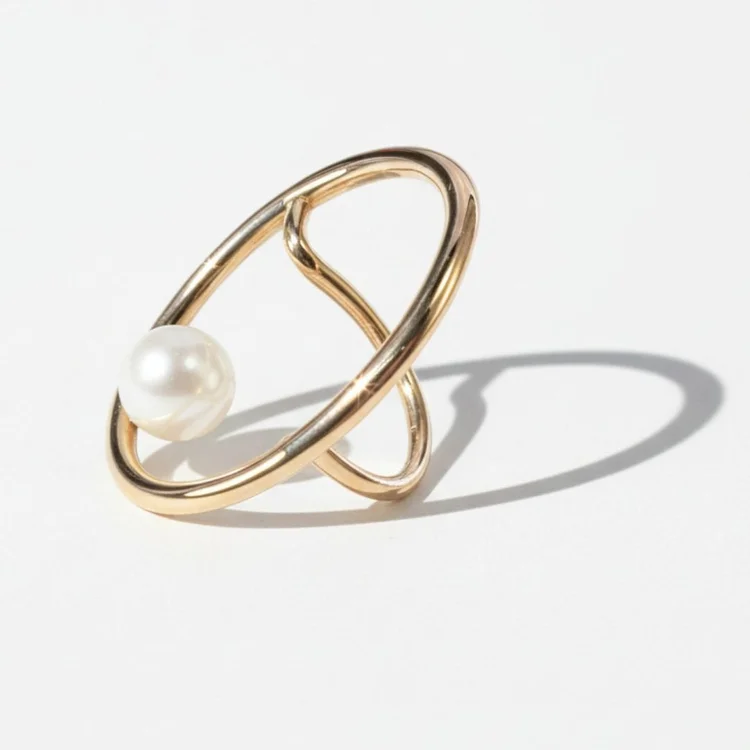
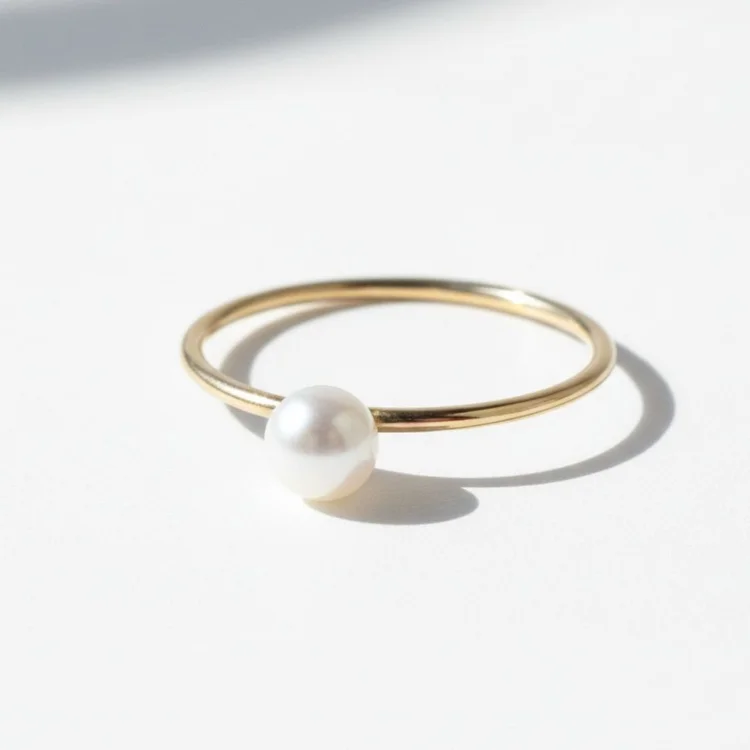
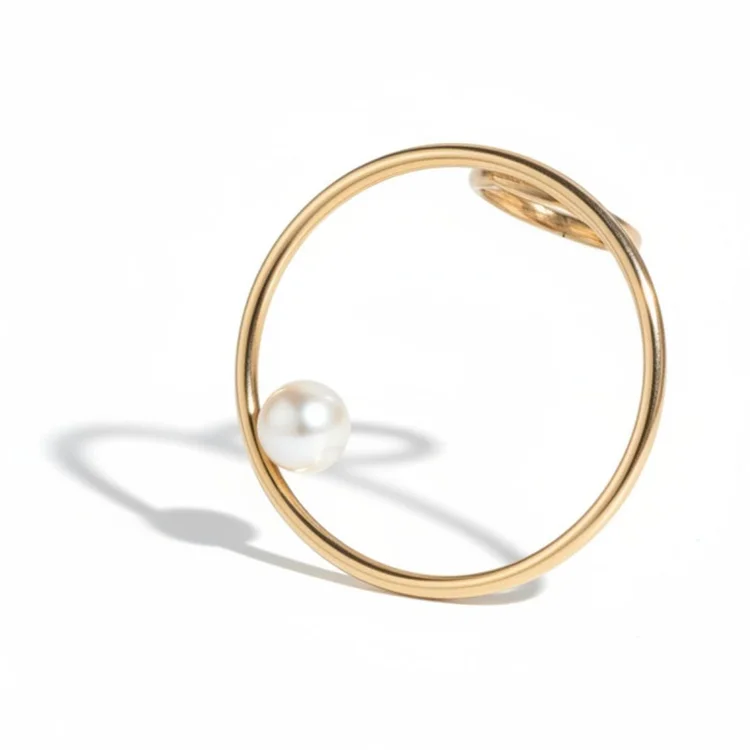
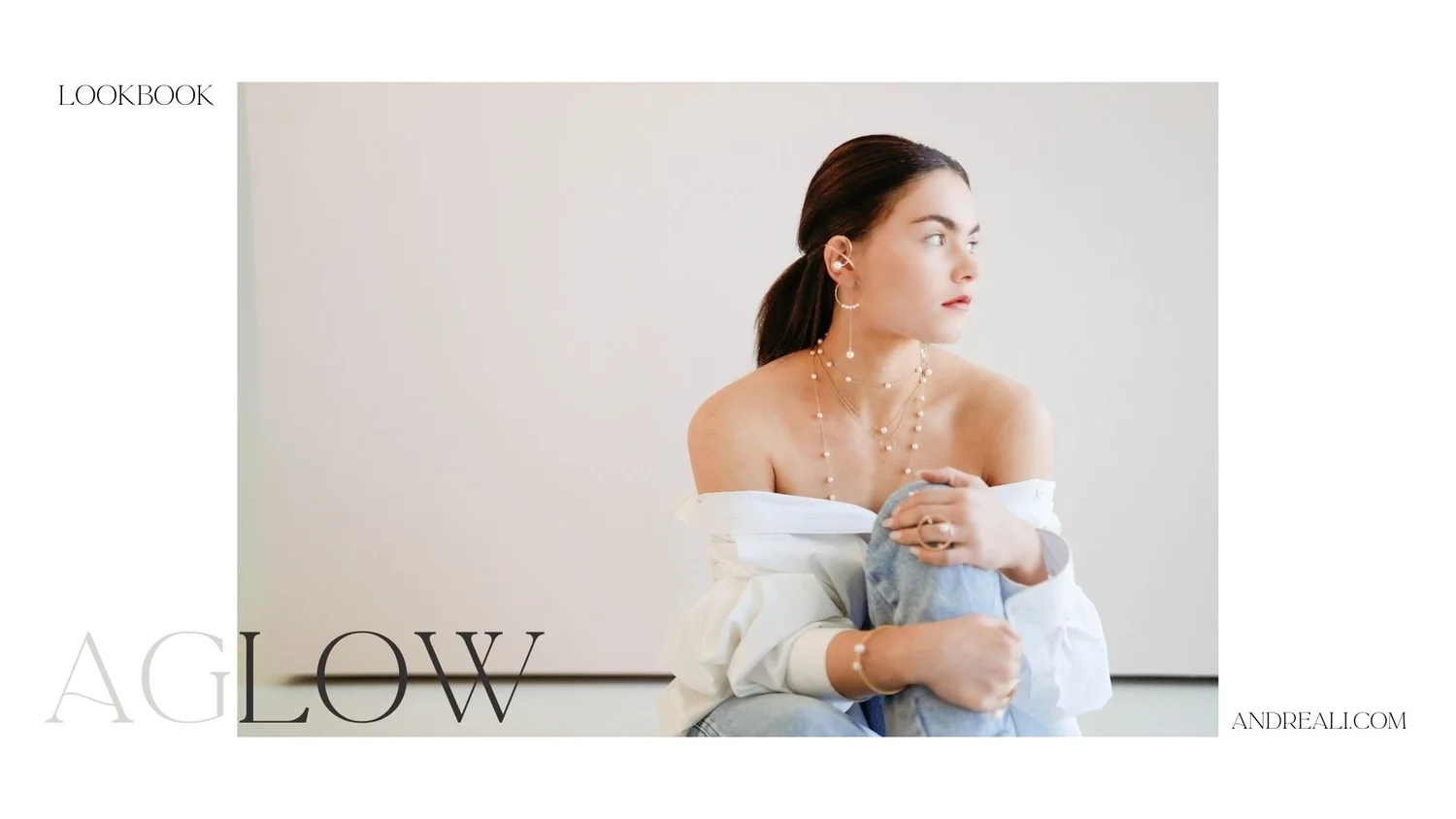
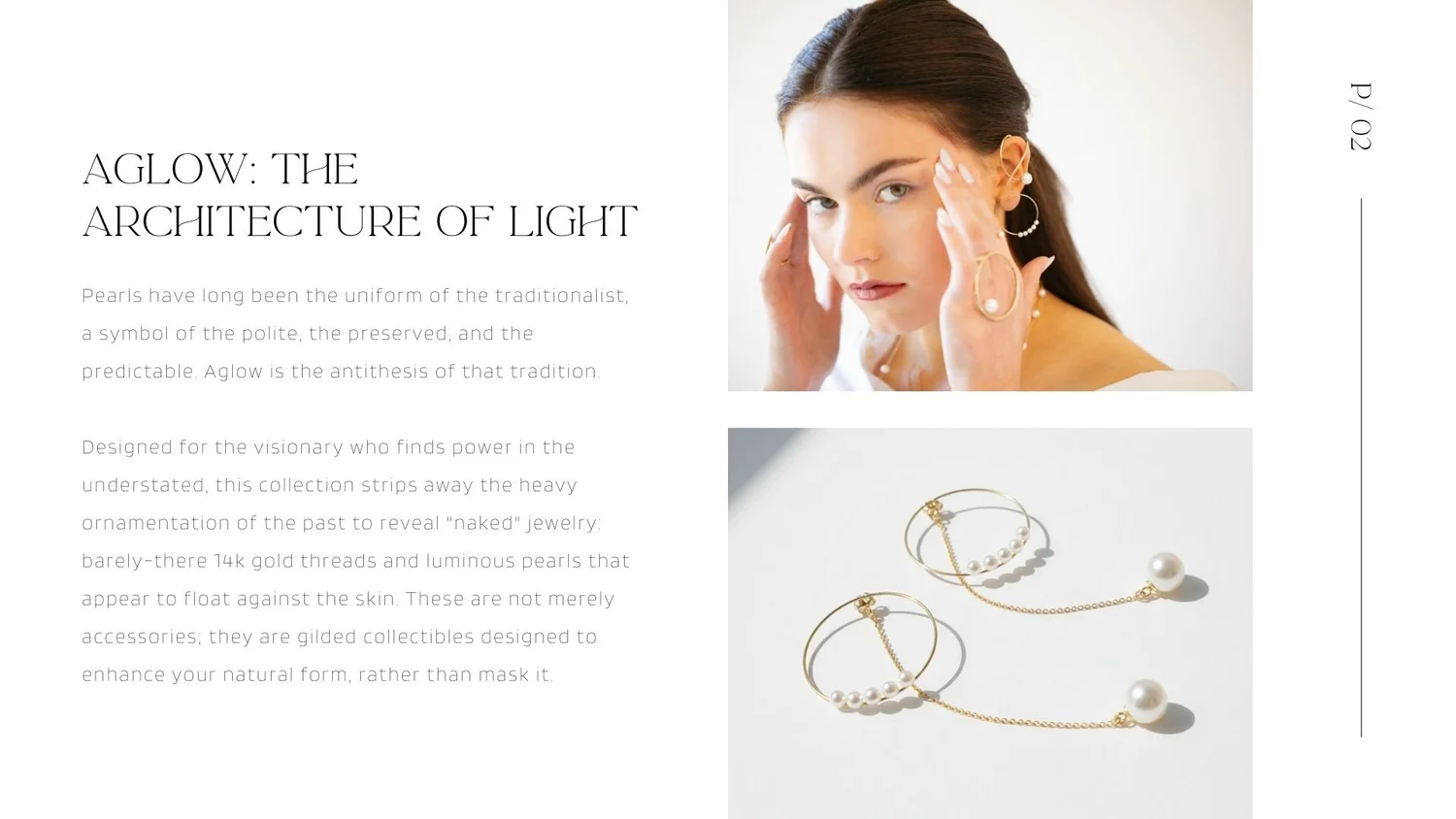
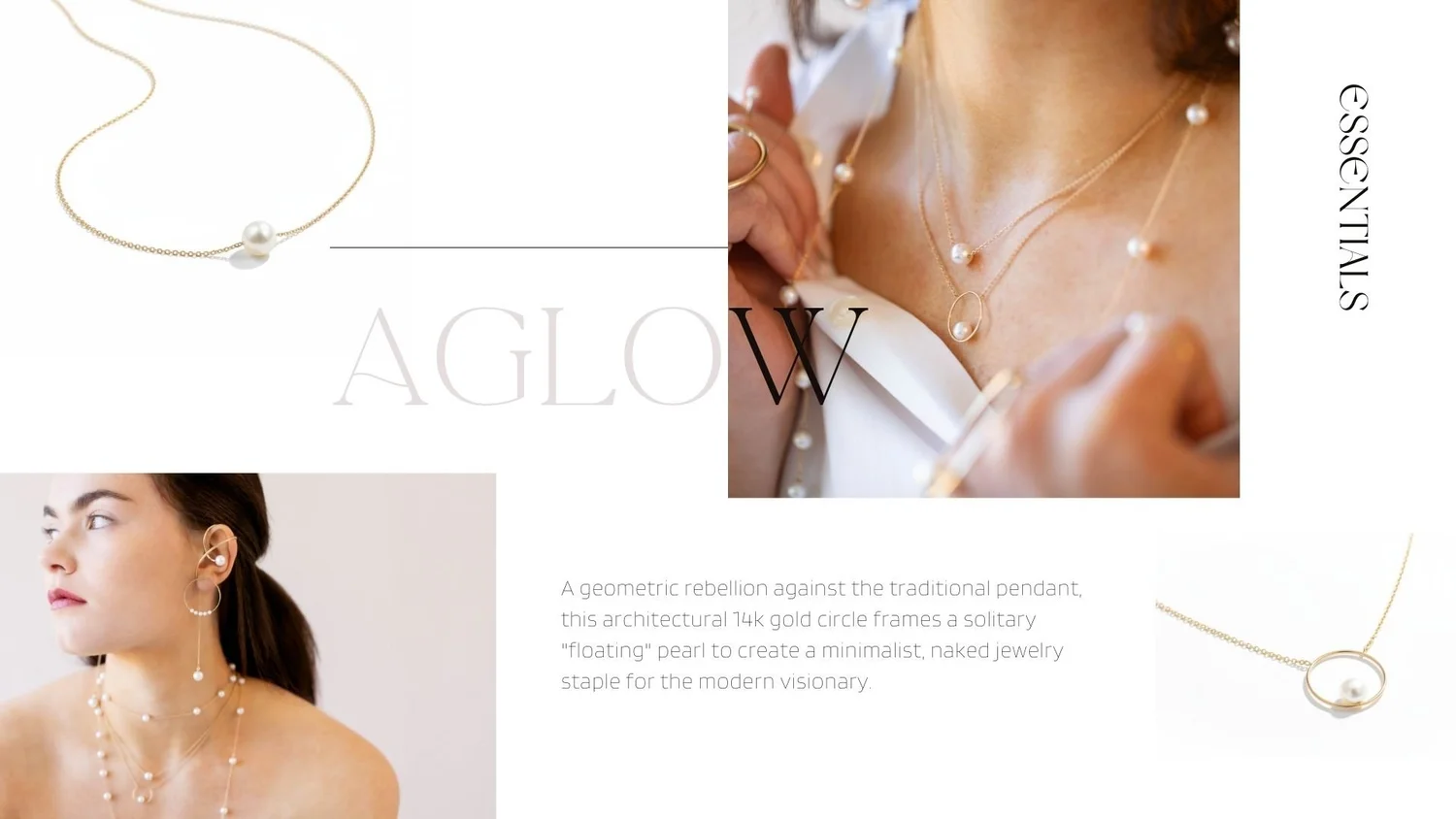
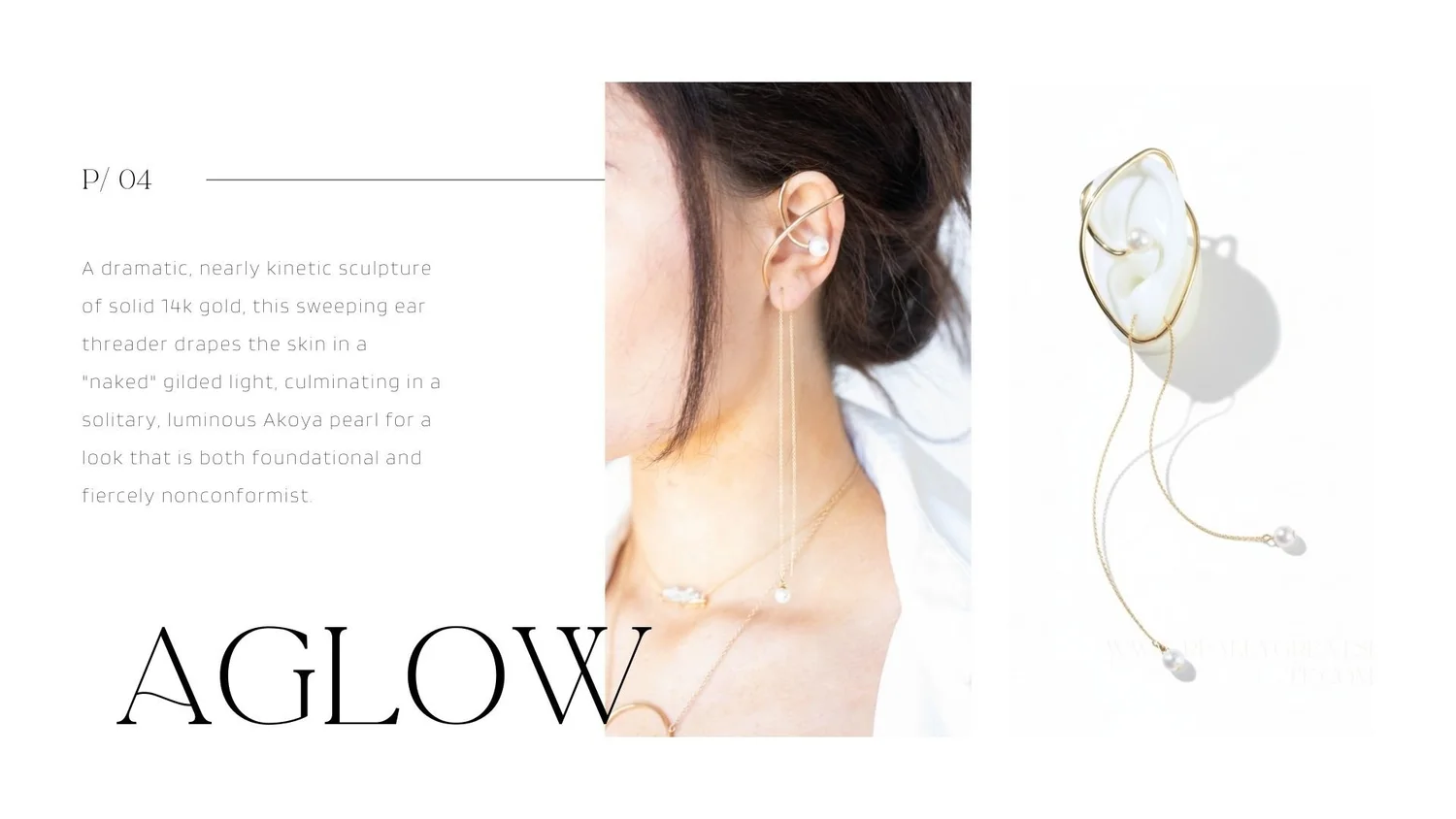
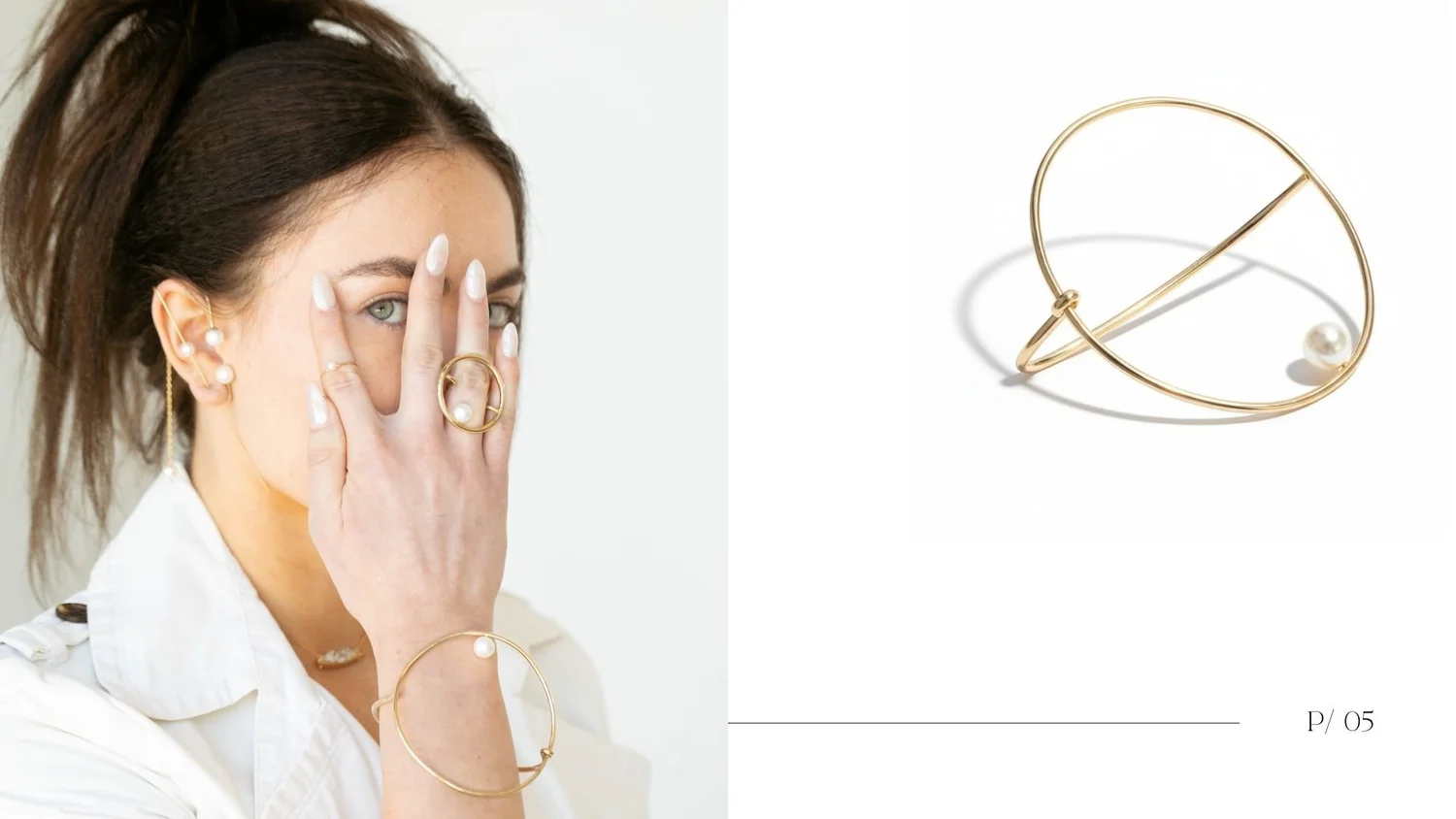
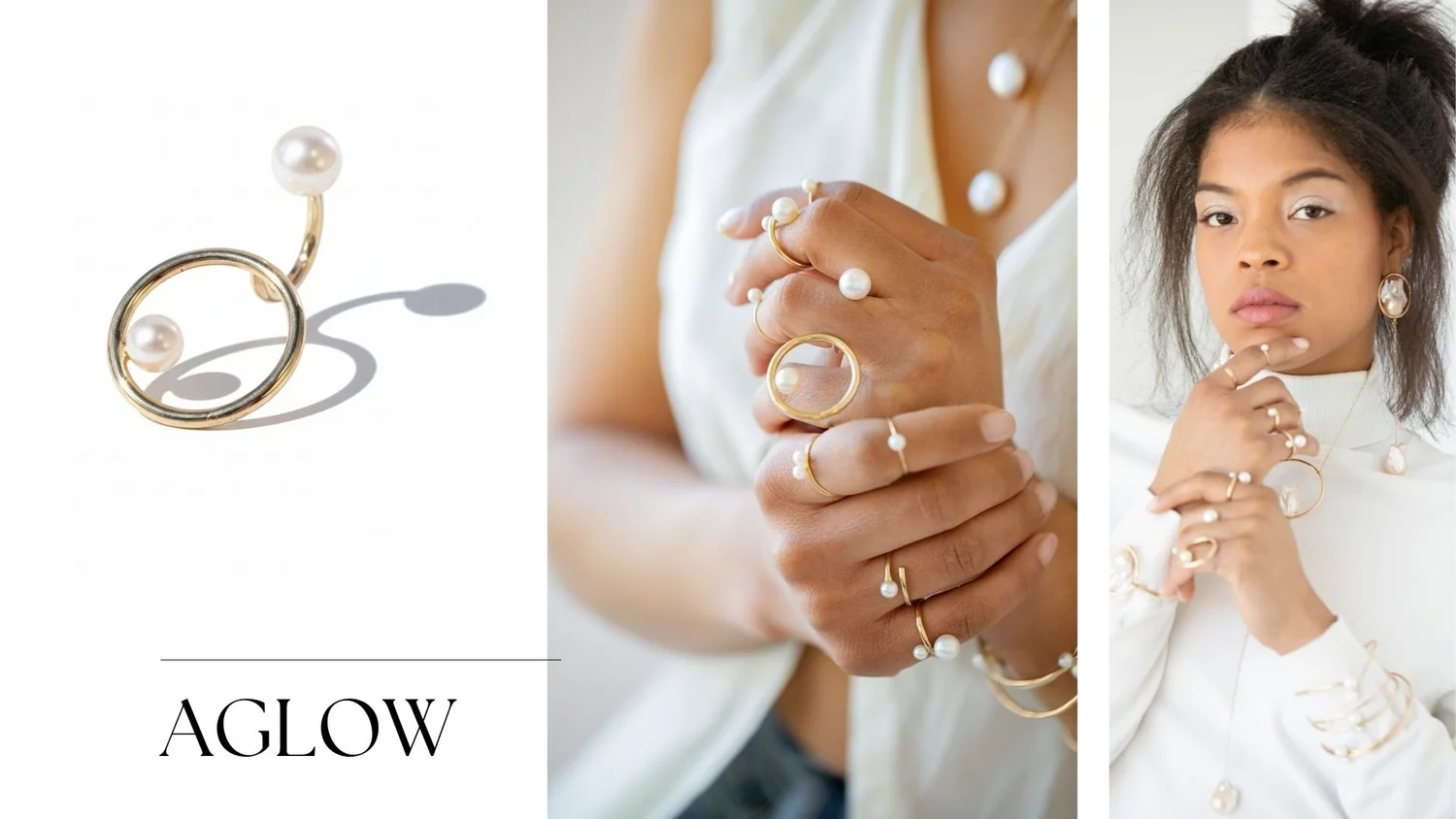
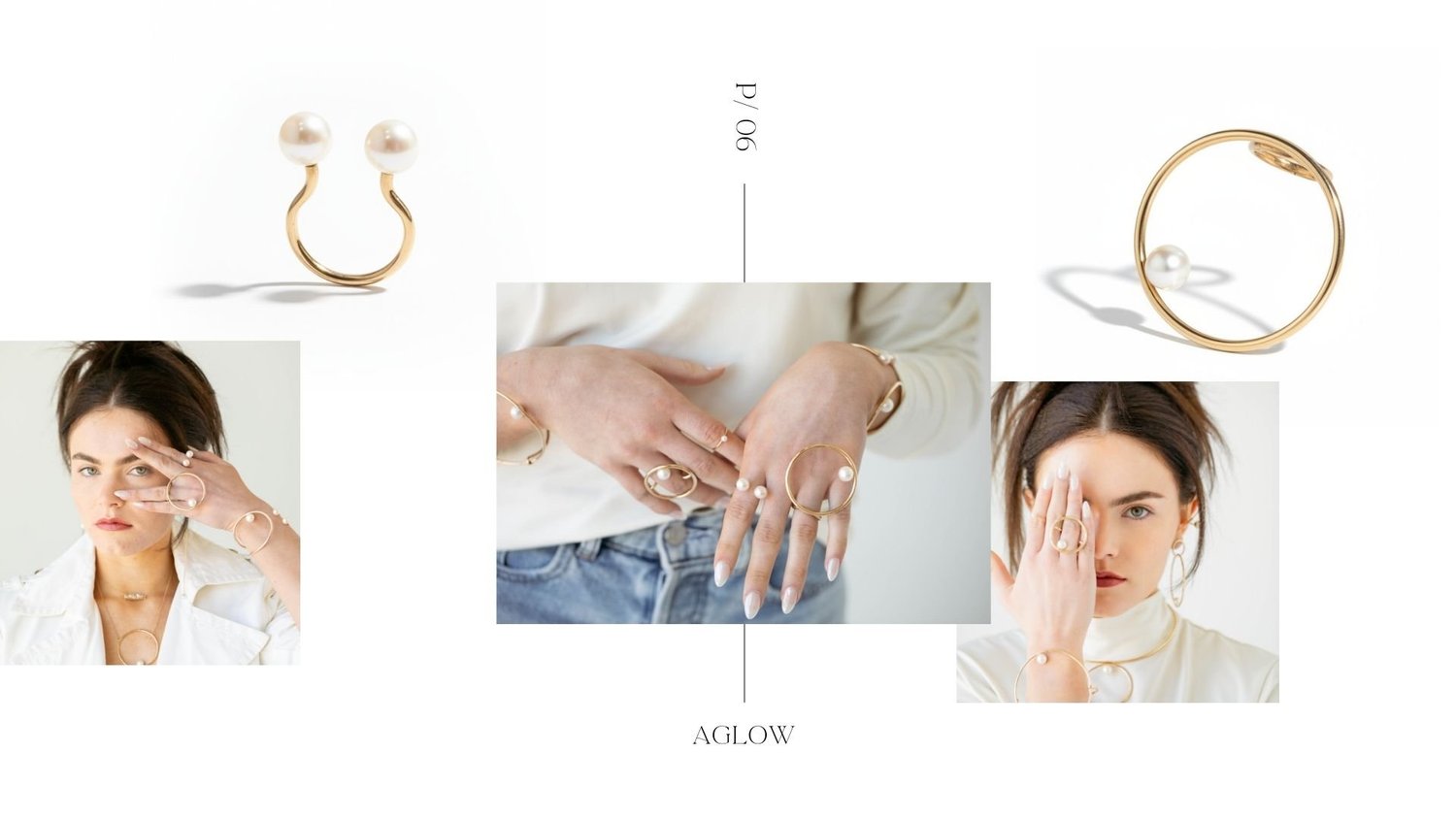
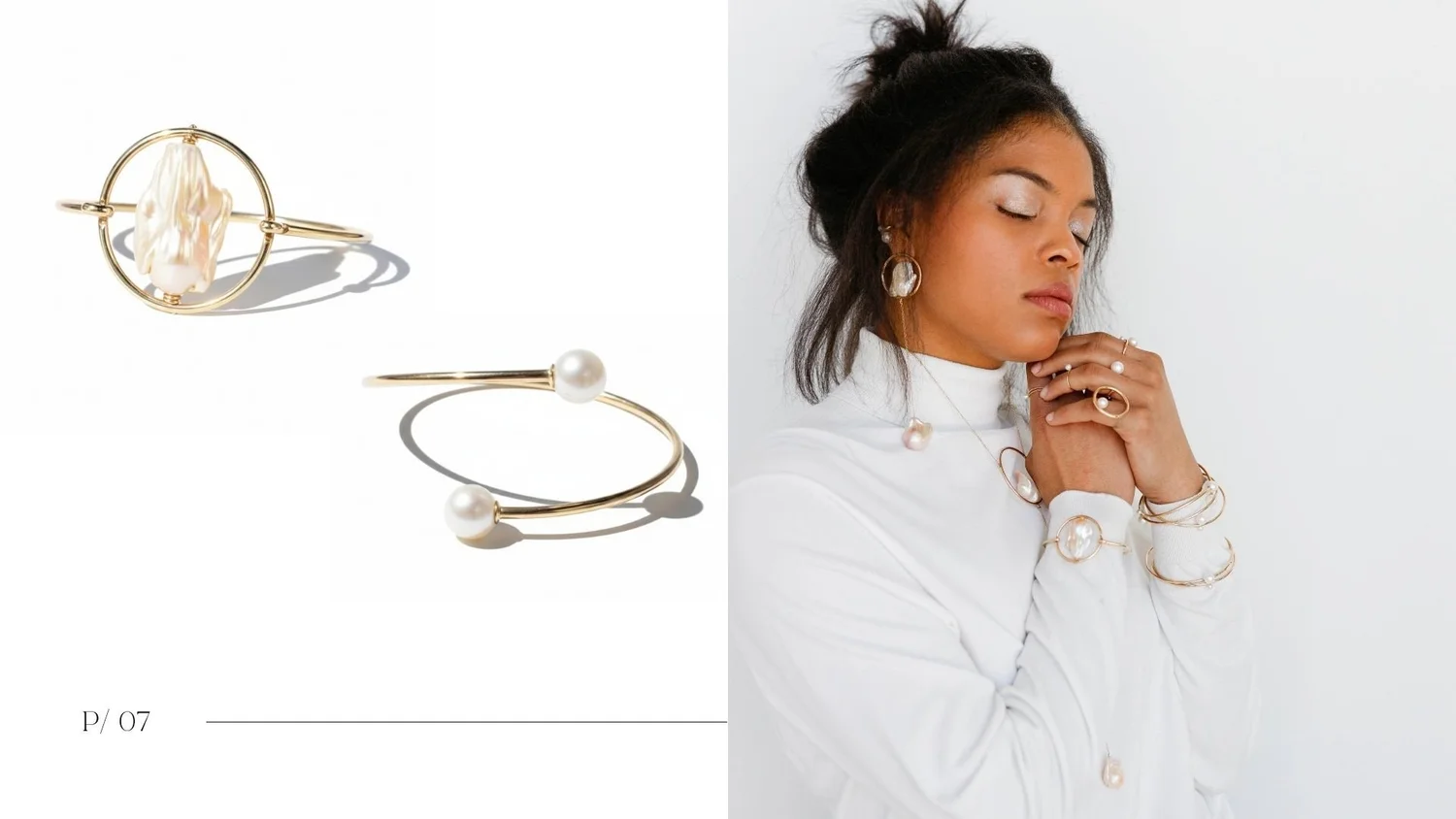
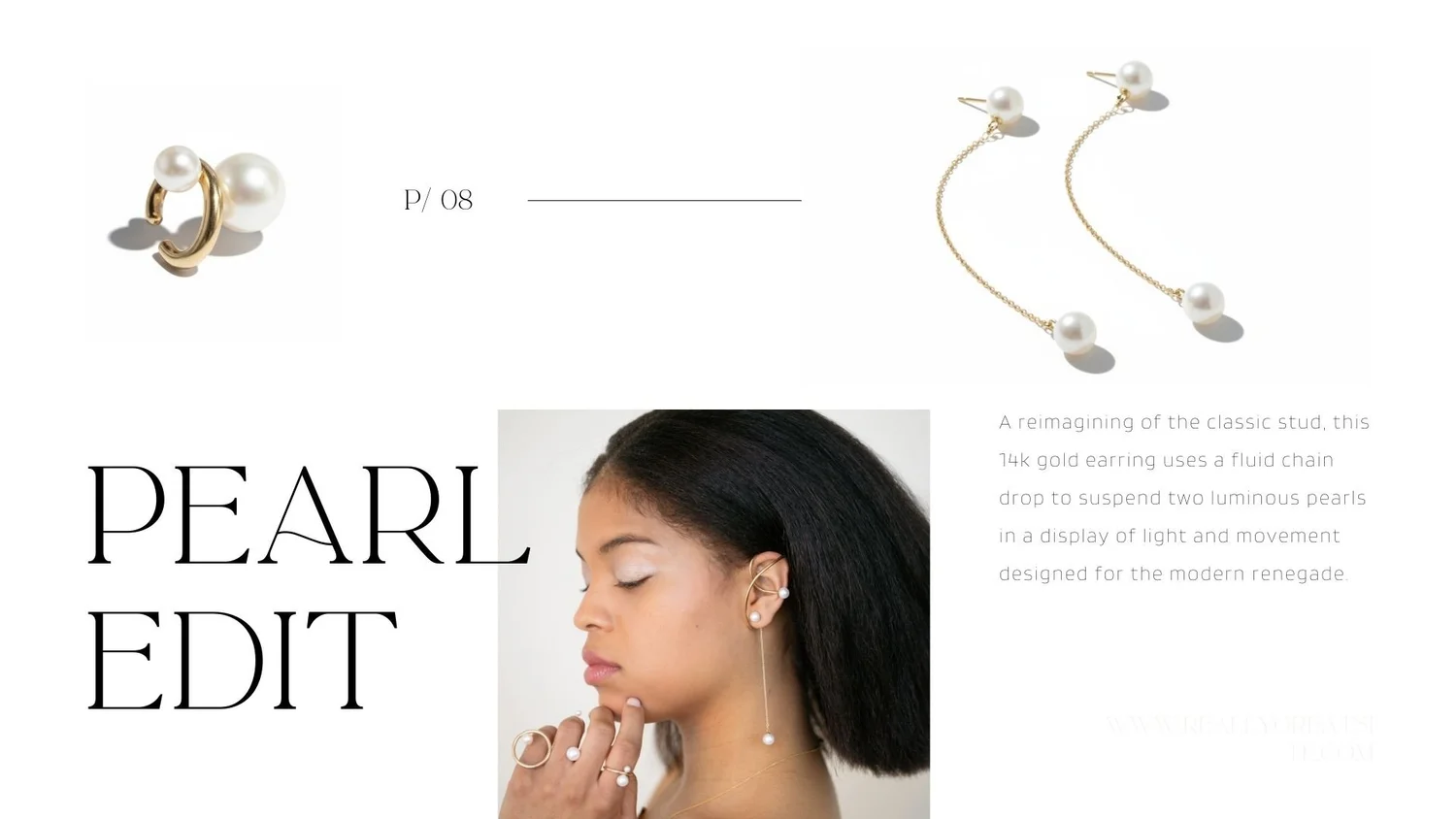
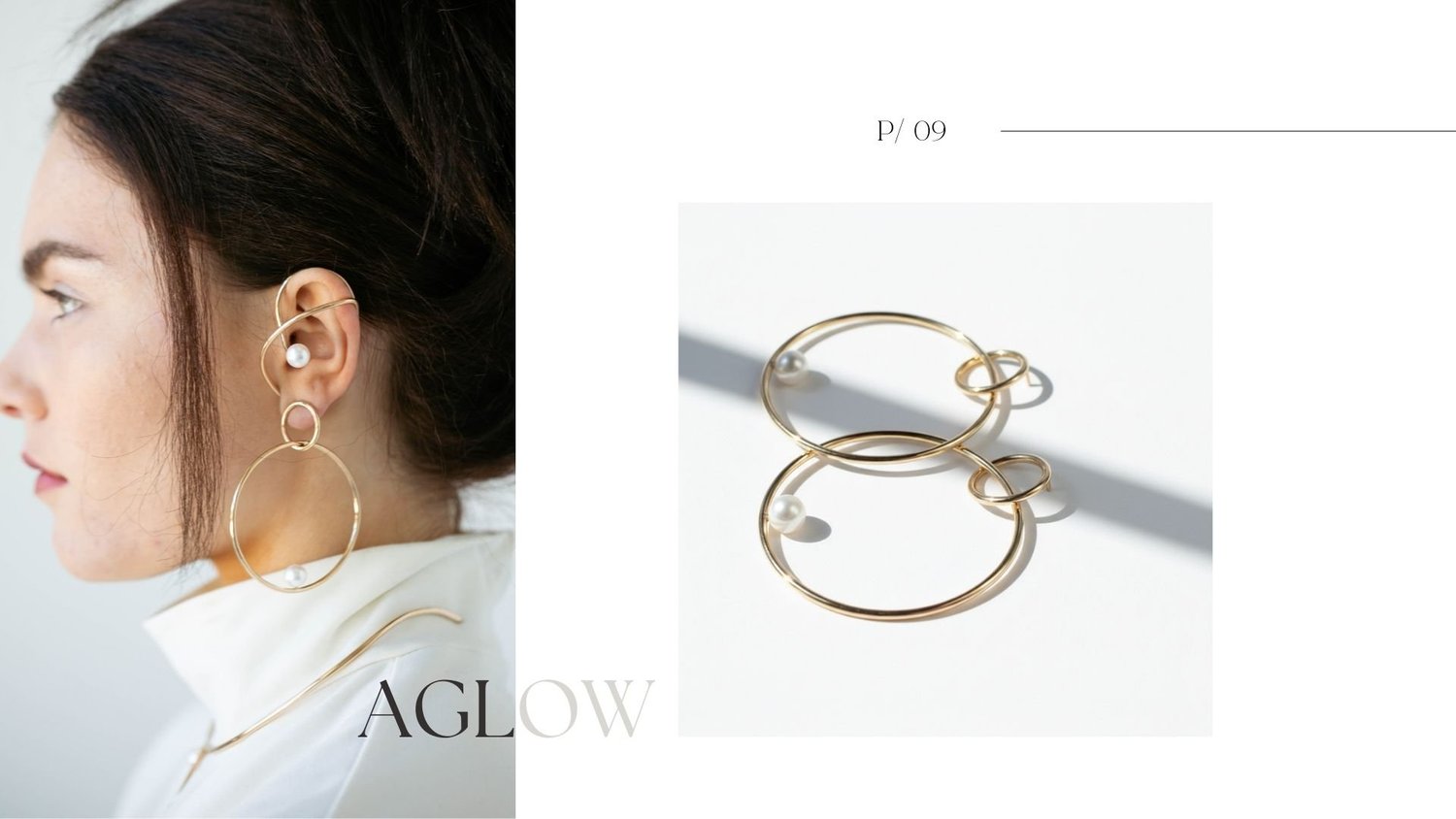
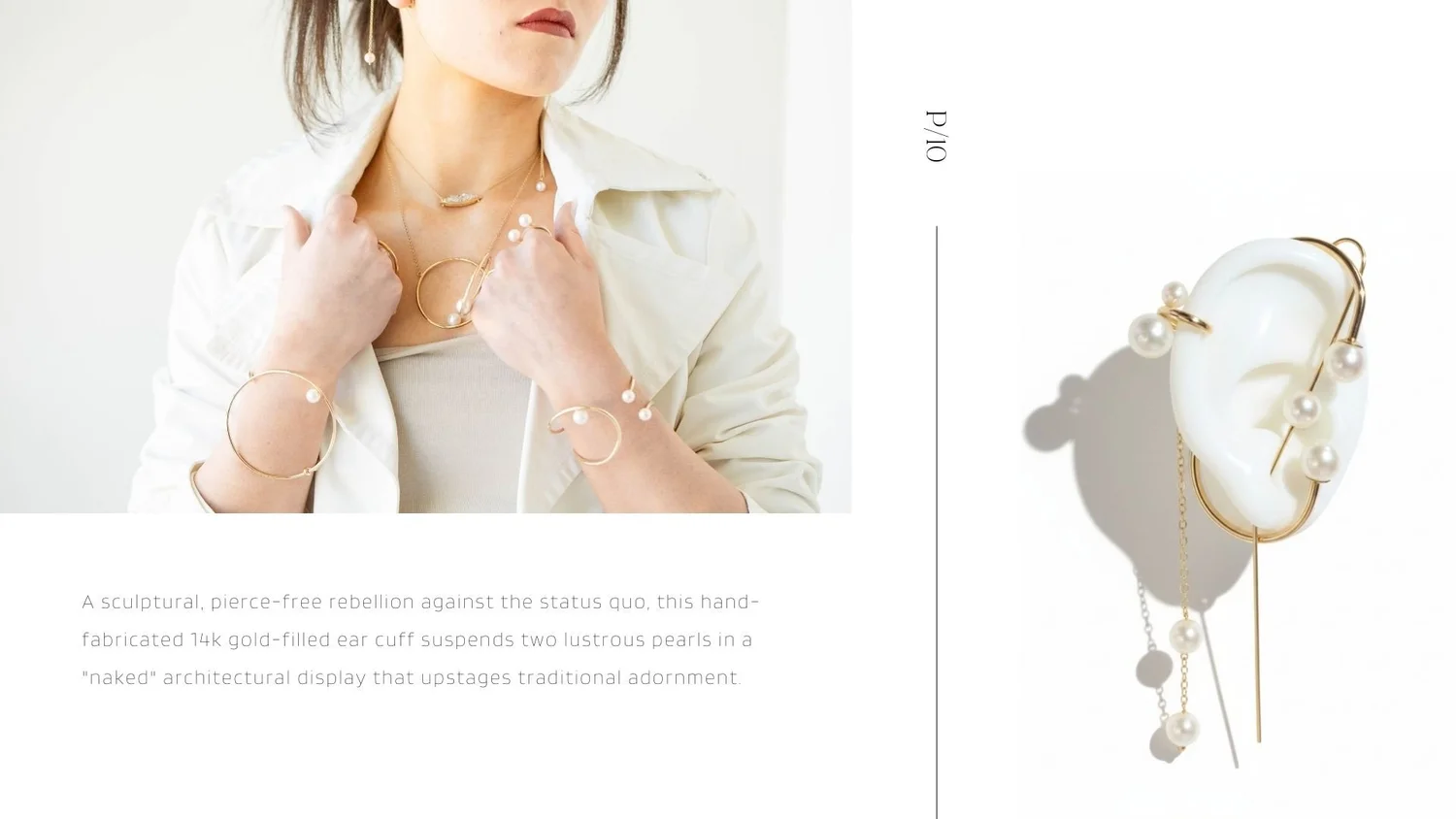
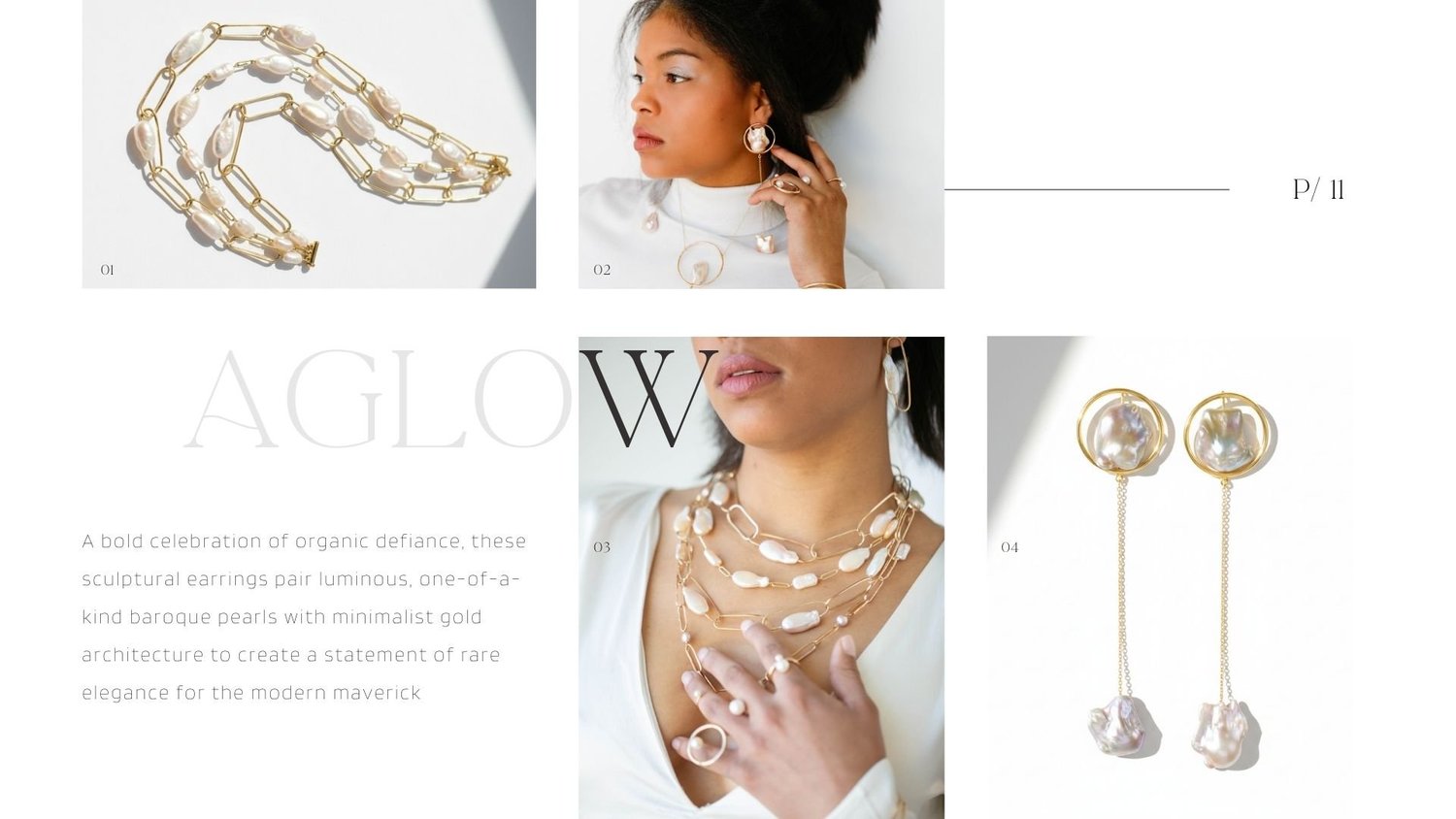
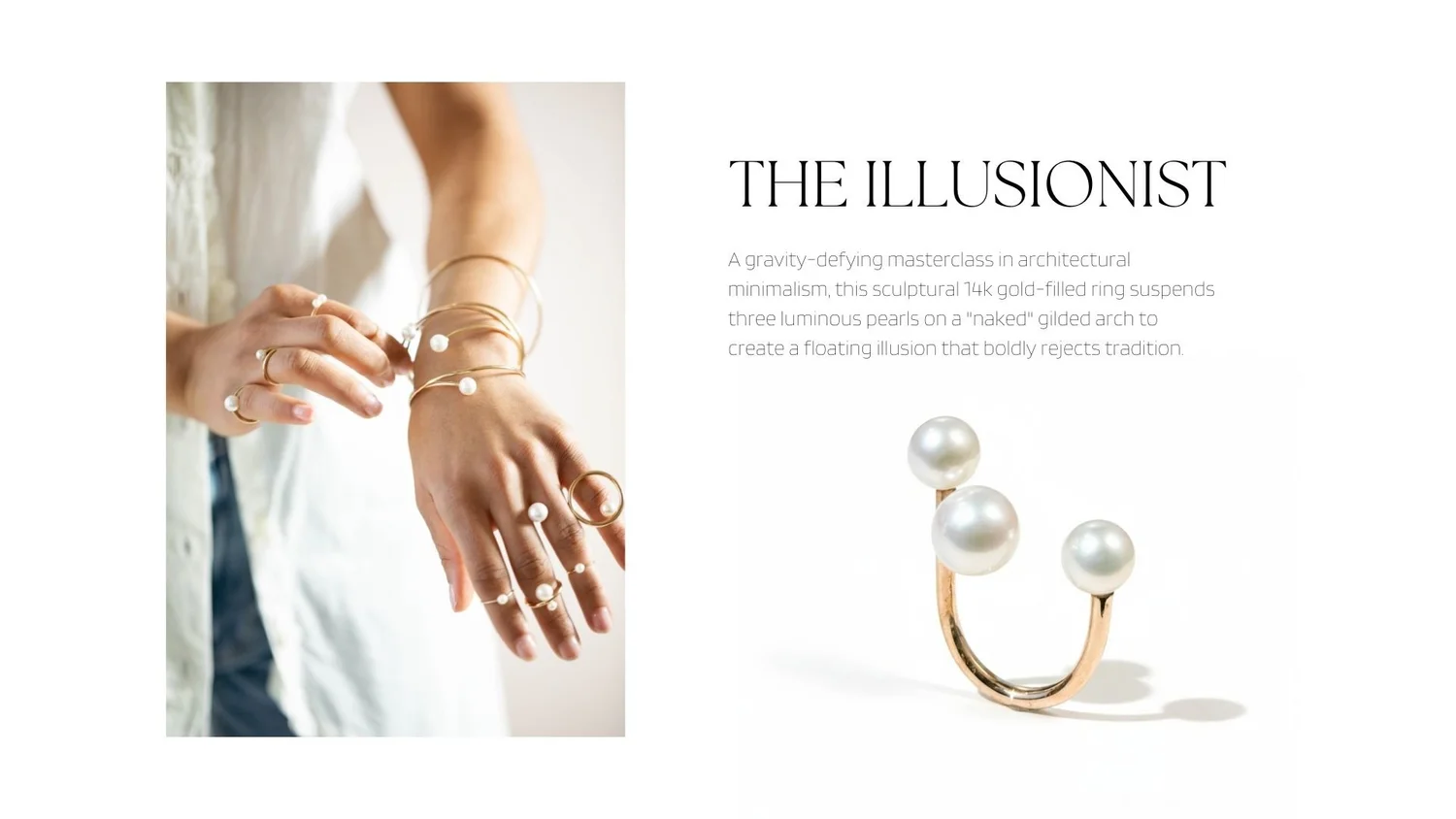
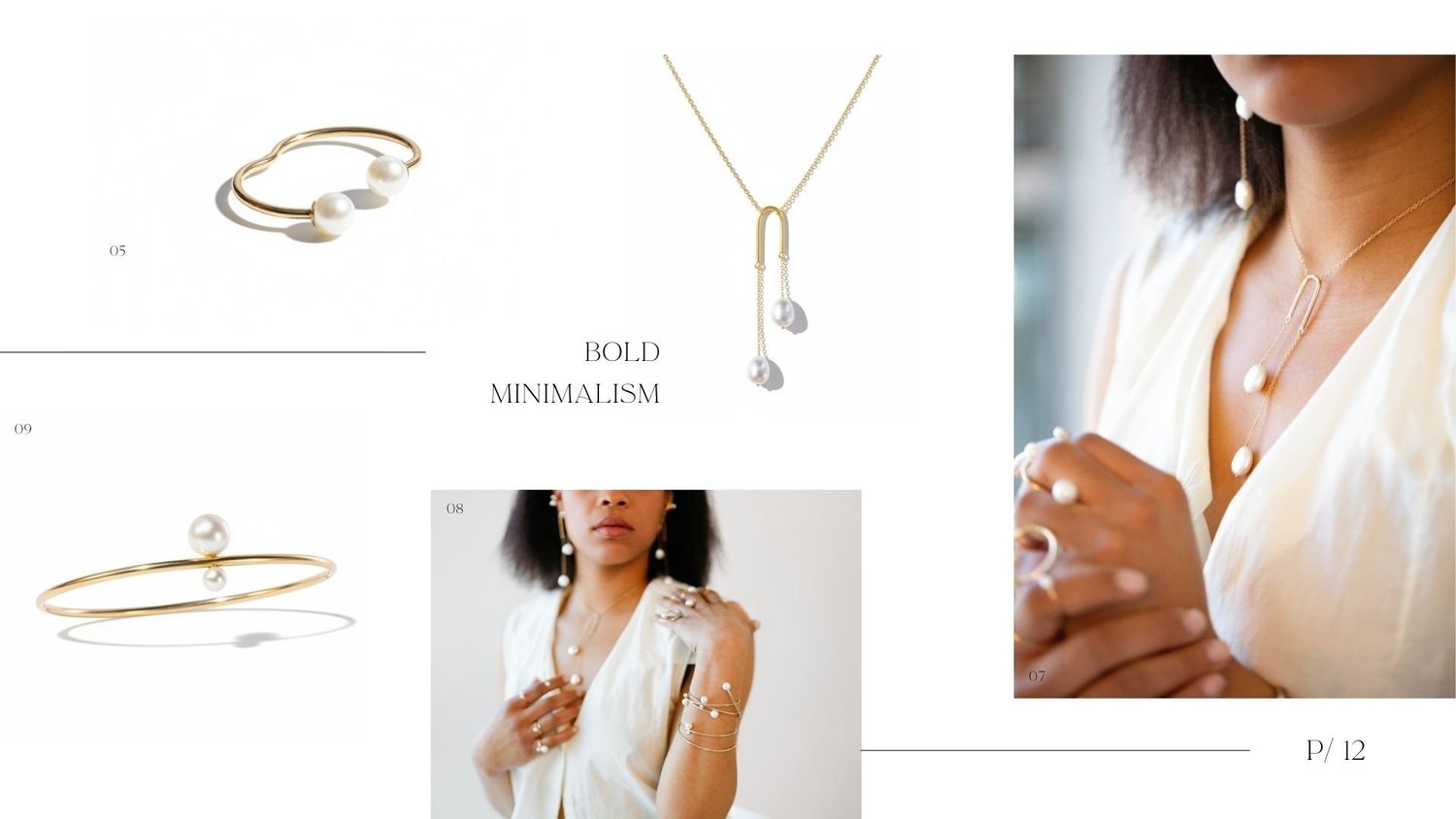
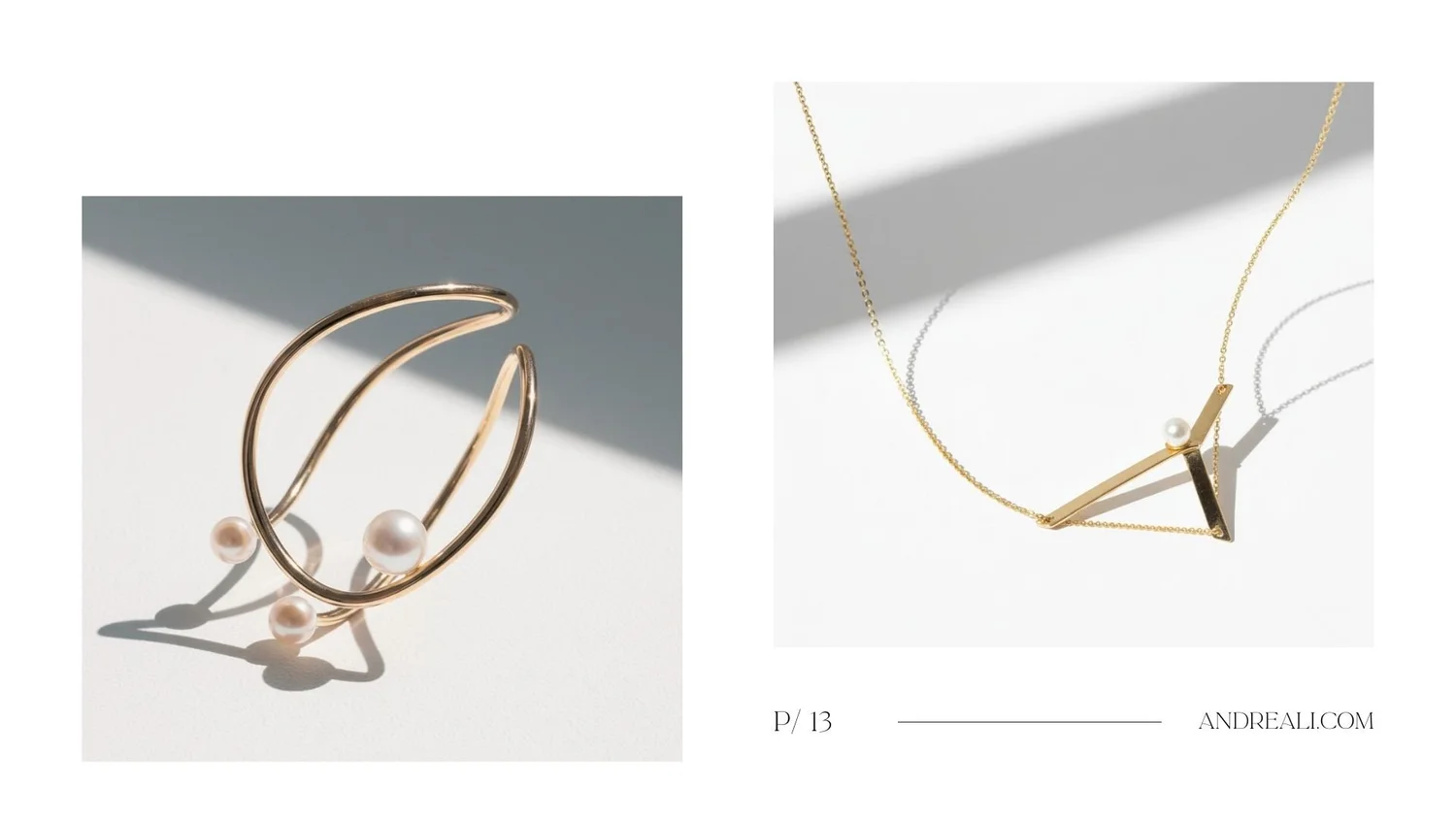
Redefining traditional elegance as an architectural study of light, the Aglow collection strips away heavy ornamentation to reveal "naked" jewelry crafted from luminous pearls and barely-there 14k gold threads. These handcrafted, gilded collectibles are designed to enhance the wearer's natural form and are intended for the modern visionary.
The Guide
Pearl
pearl
01
Introduction
The Pearl
“
Pearls are among the few gemstones created by a living organism, making each one a unique testament to nature's artistry.
Unlike diamonds, rubies, or emeralds that form deep within the earth, pearls emerge from the soft tissue of mollusks, primarily oysters and mussels. This organic origin gives pearls their distinctive warmth and luster that has captivated humanity for millennia.
Pearls are composed of nacre (mother-of-pearl): microscopic layers of aragonite crystals bound by conchiolin. That layered structure creates the soft glow we call luster, and the iridescence we call orient.
02
Classification
Saltwater vs Freshwater
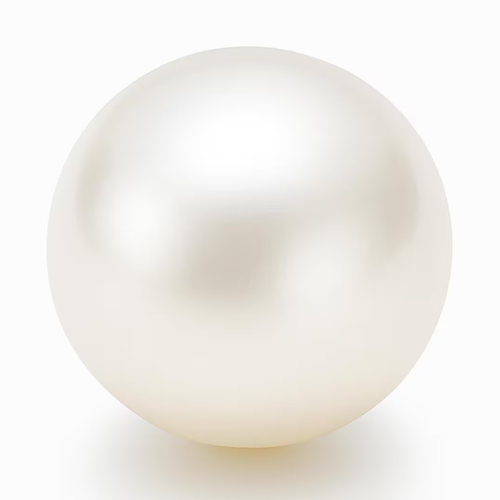
Akoya
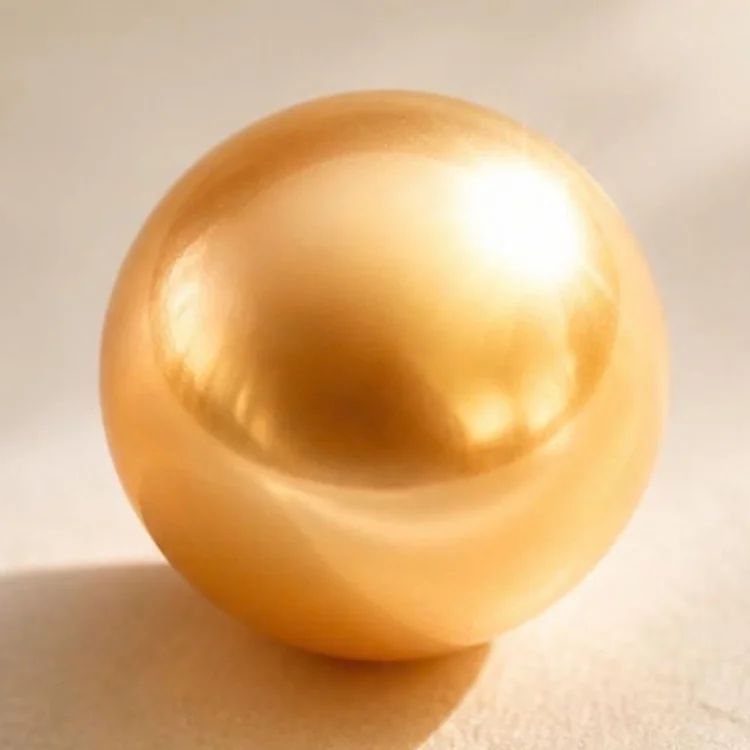
South Sea
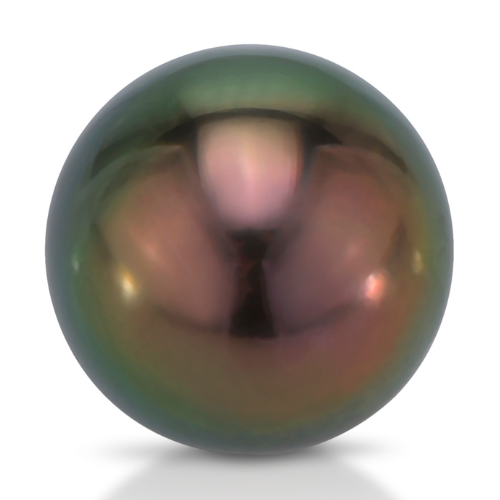
Tahitian
Freshwater
Saltwater Pearls
Akoya Pearls: Classic white pearls known for exceptional luster and round shapes (often 6–8mm).
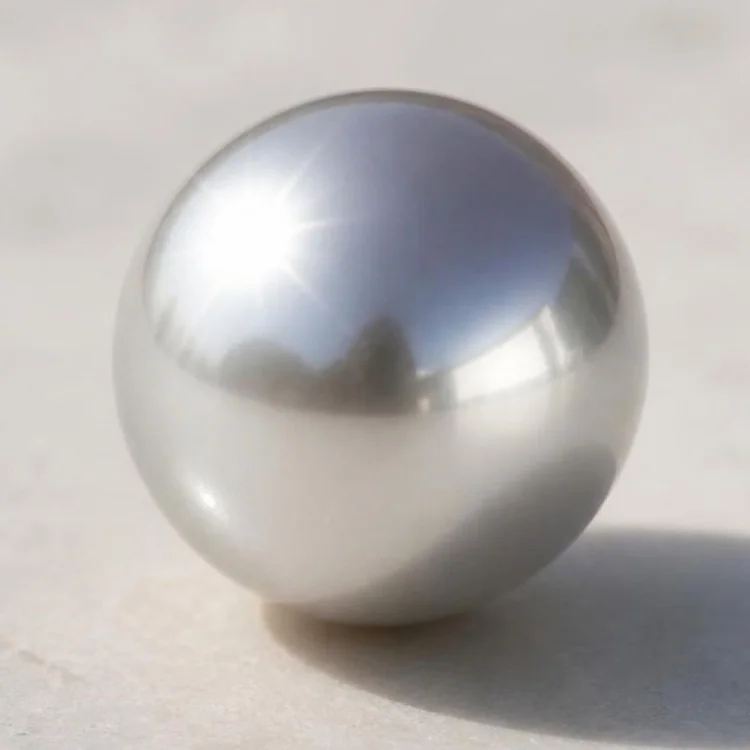
South Sea Pearls: Larger cultured pearls (about 9–20mm) in white, silver, and golden hues.
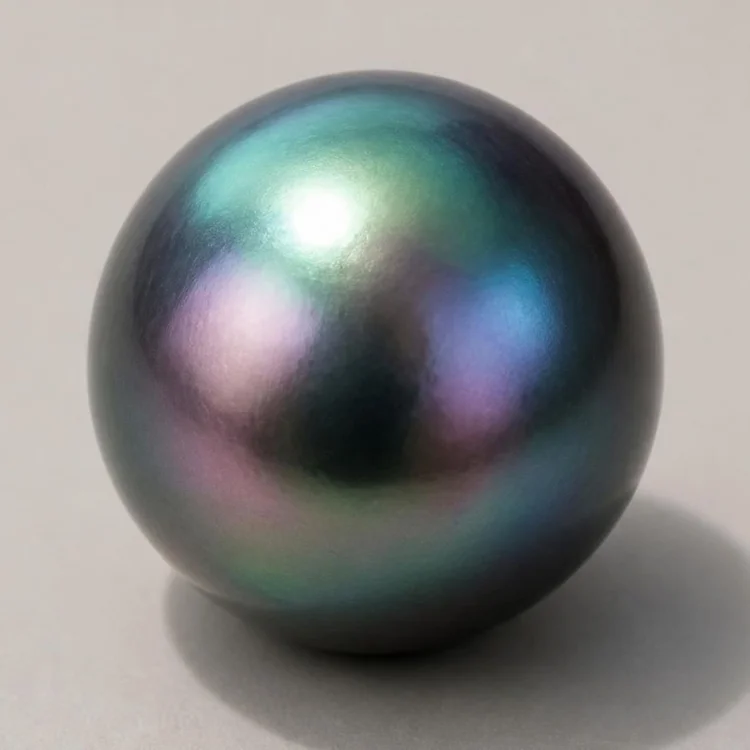
Tahitian Pearls: Naturally dark pearls with peacock/green/gray tones (often 8–16mm).
Key Characteristics
Higher luster, mirror-like surface
Typically one pearl per oyster
Premium pricing
Freshwater Pearls
Origin: Cultivated primarily in lakes and rivers (mussels, not oysters). One mussel can produce multiple pearls.
Shape Variety: Rounds, baroques, coins, rice shapes, and buttons, perfect for creative designs.
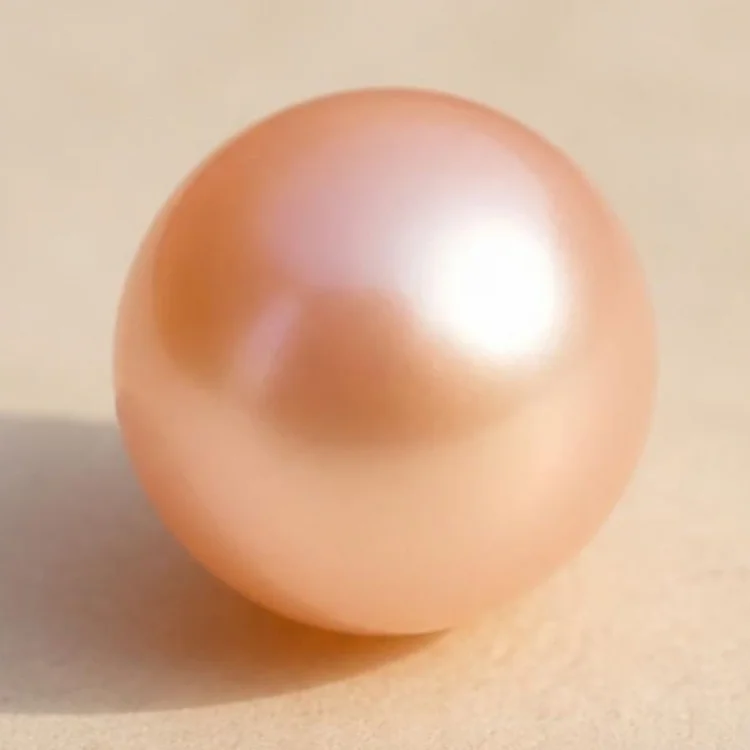
Color Range: Natural whites, creams, pinks, peaches, lavenders, and mauves.
Key Characteristics
Solid nacre composition
Often durable over time
Accessible pricing
03
Nature's Process
How Pearls Form
“
A pearl is born from adversity, when an irritant enters a mollusk, nature responds with layer upon layer of luminous nacre.
01
The Intrusion
A foreign particle enters the shell and lodges in soft tissue, triggering the process.
02
Defense Mechanism
The mantle secretes nacre to isolate the irritant.
03
Layer by Layer
Thousands of microscopic layers build over time, creating luster.
04
The Pearl Emerges
After years, a pearl forms; nacre quality drives shine, and positioning affects shape.
Natural vs Cultured Pearls
Natural pearls form without human intervention and are rare. Cultured pearls follow the same biological process, but pearl farmers introduce the initial nucleus to support more reliable production, while still letting nature do the actual layering.
04
Symbolism
Pearl Meaning
Purity
Traditionally, pearls symbolize clarity and innocence, quiet confidence you can actually wear.
Wisdom
They form over time, layer by layer, beauty shaped by patience and experience.
Prosperity
Across cultures, pearls represent abundance, treasures born from water and time.
Birthstone Significance
Pearls are the birthstone for June and are associated with Cancer, and in gemstone lore they are said to bring calming energy and emotional balance.
Wedding Tradition
Pearls are traditionally gifted on the 30th wedding anniversary and are a classic bridal symbol of new beginnings.
05
Through Time
Pearl History
2300 BCE
Ancient China
Early records describe pearls as revered symbols of wisdom and prestige.
Ancient Rome
Roman Empire
Pearls became the ultimate status symbol, linked to wealth and power.
1500s
The Pearl Age
In Tudor England, pearls were worn as visible symbols of authority and rank.
1893
Mikimoto’s Revolution
Cultured pearls helped make pearl jewelry accessible beyond royalty and elites.
20th Century
Modern Icon
Pearls became timeless style shorthand: elegant, polished, and endlessly adaptable.
06
Palette
Pearl Colors
Pearl color is influenced by species, water conditions, and trace elements: each hue carries its own vibe.
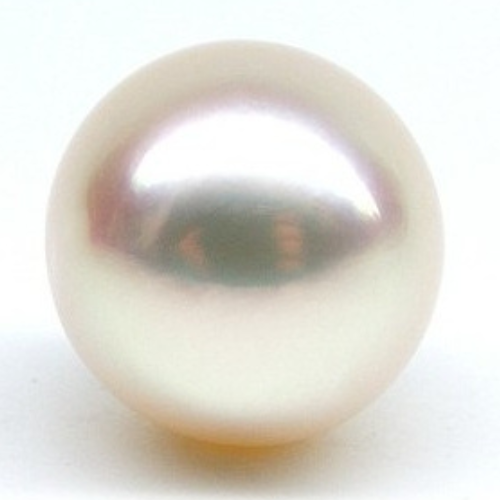
White
Classic • Pure • Timeless
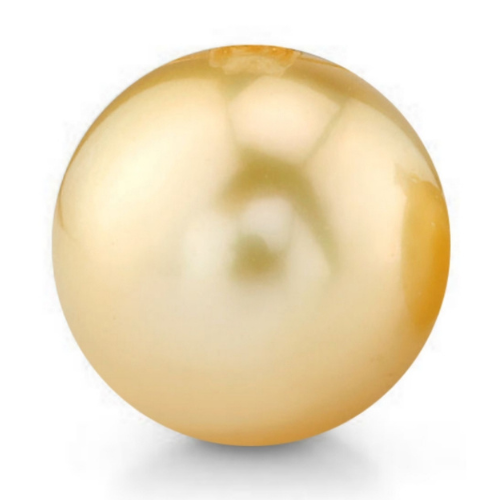
Golden
Warm • Rare • Luxe
Pink
Soft • Romantic • Sweet
Lavender
Dreamy • Unique • Fresh
Black
Bold • Mysterious • Chic
Silver
Cool • Modern • Sleek
Peach
Delicate • Natural • Warm
Peacock
Iridescent • Dramatic • Rare
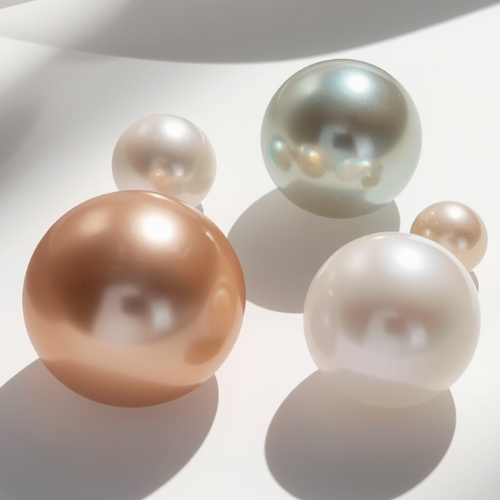
Illustrations of each color, not photographs of specific pearls.
Color Psychology
White & Cream: New beginnings and classic elegance (hello, bridal).
Golden: Warmth and prosperity, major milestone energy.
Pink & Peach: Love and softness, easy everyday glow.
Black & Peacock: Mystery and individuality, statement-maker vibes.
07
Preservation
Pearl Care
"Last on, first off", the golden rule that preserves pearl luster for generations.
Do
Wipe pearls with a soft, damp cloth after wear
Store separately in a soft pouch or lined box
Apply perfume and cosmetics before putting pearls on
Restring a strung strand every 1–2 years if worn regularly (my pieces are wire-set, never strung)
Wear them, skin oils can help maintain luster
Don’t
Use ultrasonic or steam cleaners
Expose pearls to acids (vinegar, lemon, etc.)
Store in plastic bags (pearls need air moisture)
Leave pearls in heat or direct sun for long periods
Wear while swimming, showering, or exercising
Professional Care
For valuable pieces, consider a yearly inspection: clasp check, gentle cleaning, and thread assessment. Knotting between pearls helps prevent rubbing and protects the strand if it breaks.
08
Expression
Styling Pearls
Professional
A classic strand or simple studs add polish to workwear, quiet, confident, effortless.
Evening
Layer strands or go bold with statement earrings, pearls love a dramatic moment.
Casual
Break the rules: baroques, mixed metals, asymmetry, pearls can be everyday cool.
Neckline Pairing
V-neck: Princess or matinee length
Crew neck: Choker or collar
Strapless: Multi-strand or opera
High neck: Long rope or drop earrings
Strand Lengths
Choker (14–16"): Base of throat
Princess (17–19"): Most versatile
Matinee (20–24"): Décolletage
Opera (28–35"): Below bust
Rope (36"+): Double or knot
Modern Styling Tips
Mix pearl sizes for modern layering
Pair baroques with minimalist gold
Try mismatched pearl earrings for edge
Add pearls to denim for everyday chic
Discover the timeless elegance of pearls
From the bench · Andrea Li
A pearl in almost every design
A note from Andrea Li, who sets pearls by hand in her Denver studio.
I use pearls in almost every design. I love the way their smooth luster plays against the sharp, sparkling facets of a gemstone.
I reach for all of them: freshwater, baroque, keshi and Akoya. Aglow is built mostly on rounds, and my statement pieces lean on baroques for their unusual shapes. The Akoya pearls, which are saltwater, go into my solid 14k gold pieces, to match the quality of fine jewelry. Still, I have bought freshwater pearls that rival saltwater. It really depends on the source.
My favorite source is Pearl Goddess, Betty Sue King's company, for the supreme quality of her pearls. She is the only AGTA vendor I buy from. I also buy from Earthstone and Gem House USA.
“
Pearls are forgiving in a way gemstones are not.
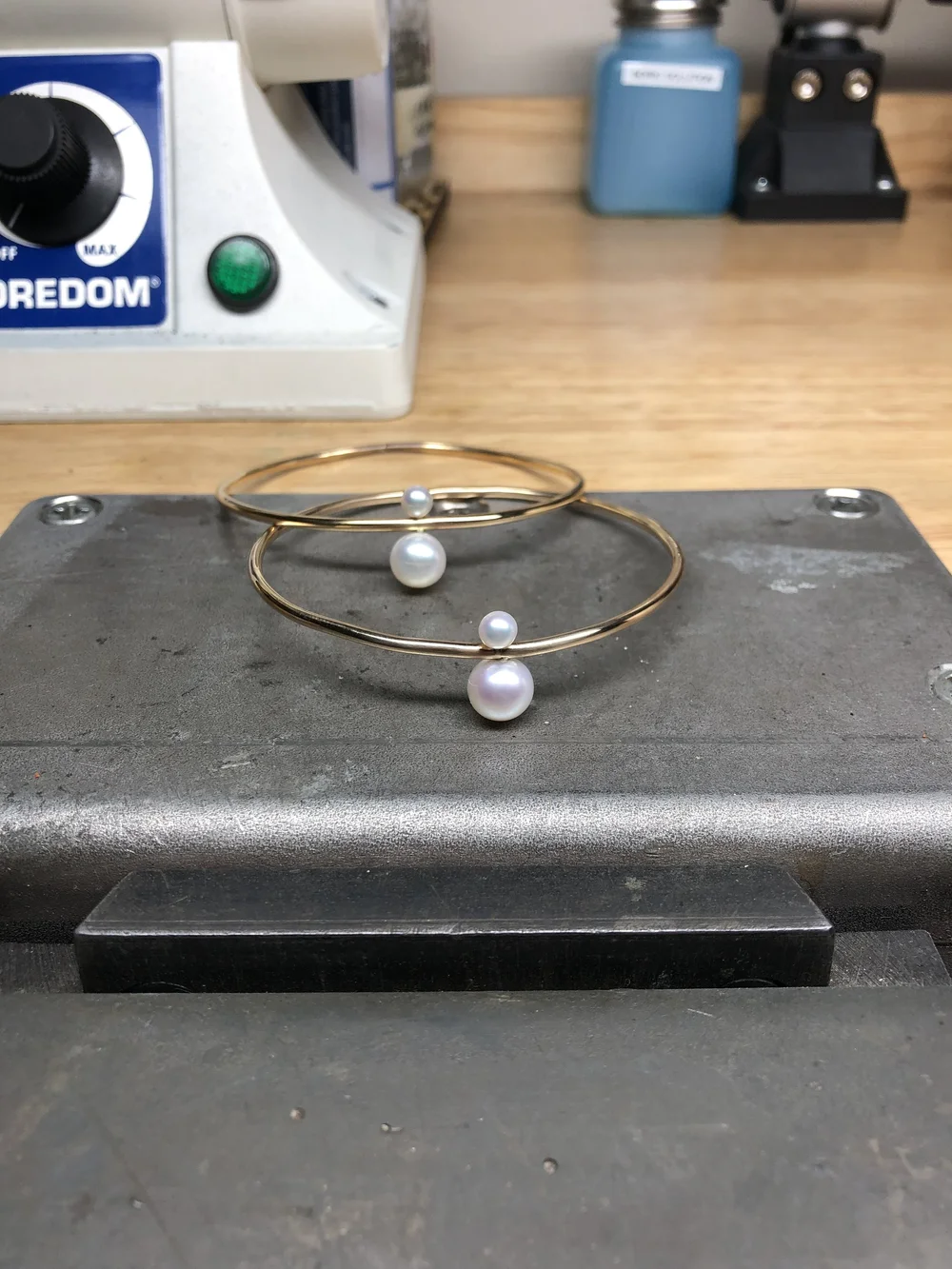
A pearl has never broken on me, although I have drilled right through a few while peg-setting them. The wire I make my pegs from is almost always thicker than the hole a pearl comes with, because I want a peg that will not bend in the finished piece. So I widen the hole with a pearl drill bit, deep enough for the pearl to sit flush against the design with none of the peg showing, and just a little wider than the peg itself. The nacre comes away as a fine white powder, like baking soda. A gemstone is less kind: the pre-drilled hole in a briolette usually sits at its narrowest point, right where it is most likely to crack.
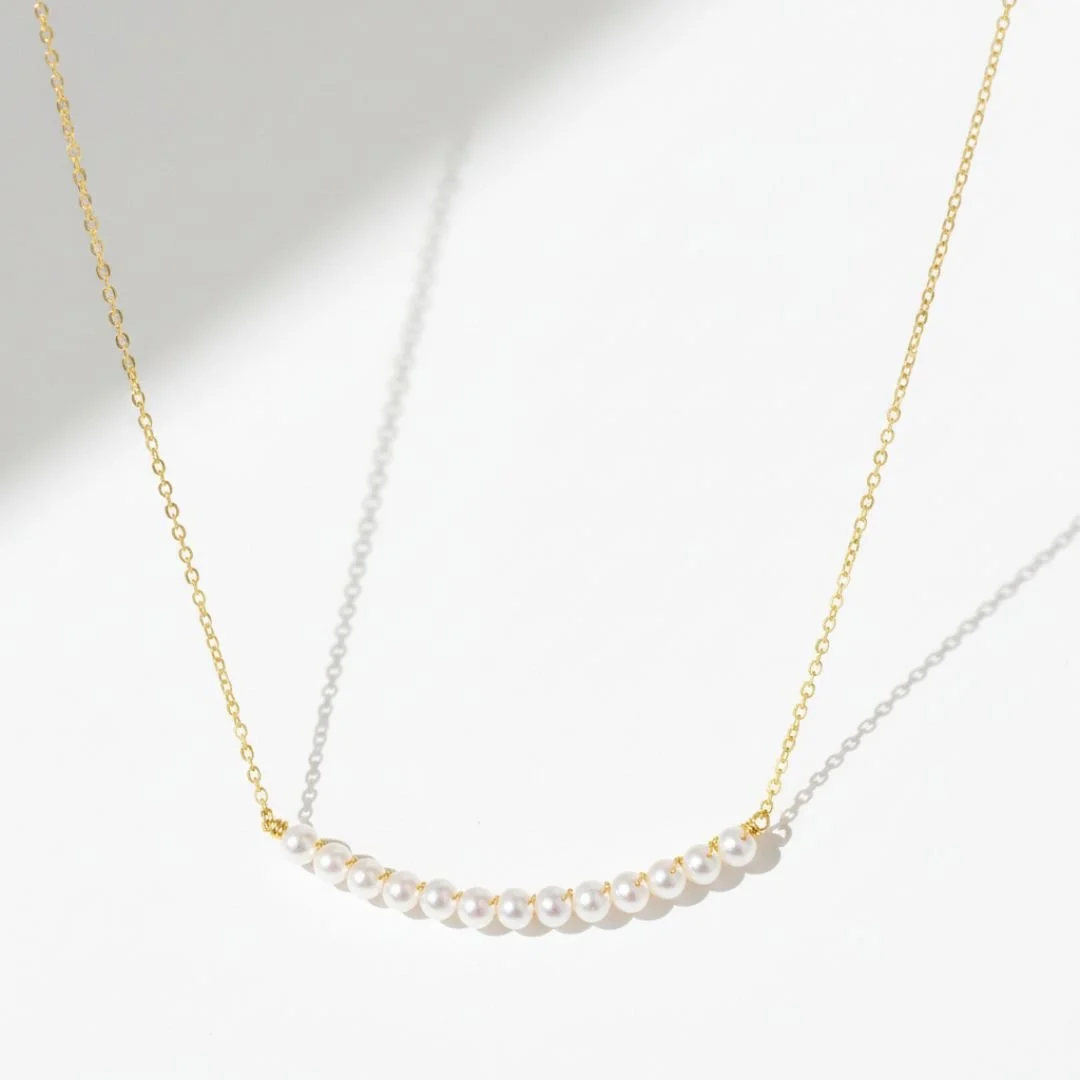
I never knot between pearls, because knotting is a stringing technique and I don't string. I like to use pearls in a non-traditional way. When I make a pearl chain, I hand-bail it: a wrapped wire loop on both sides of every single pearl, connected loop by loop into one continuous chain.
A traditional strand of pearls feels too precious and old-fashioned to me now. So I work pearls into my gemstone clusters and the body of a design rather than the part that goes around the neck, and one strand can span several finished pieces. That is what lets me feature finer, more expensive pearls in the work. Some of the pearls I use are dyed and some are their natural color.
For my next collection, Second Light, launching November 4, I used lavender keshi pearls I bought off Betty Sue's own neck. She had hand-selected them to keep for herself.
Photography Nicole Marcelli · Models include Julia Marcelli · Hair Charlie Price · Makeup Tiaja Pierre · Creative Credits
Andrea Li Aglow Pearl Jewelry
Step into the Architecture of Light, where traditional pearl jewelry is reimagined as a series of "naked" 14k gold threads and luminous floating gems. This collection of handcrafted, gilded collectibles invites the modern visionary to defy the status quo with gravity-defying sculptural silhouettes that enhance your natural form with a fierce, kinetic grace.
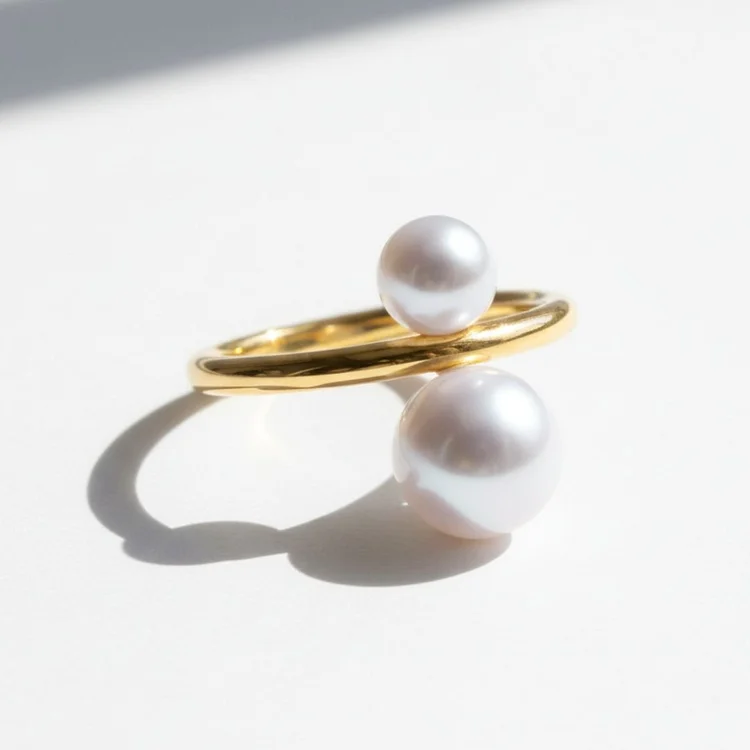
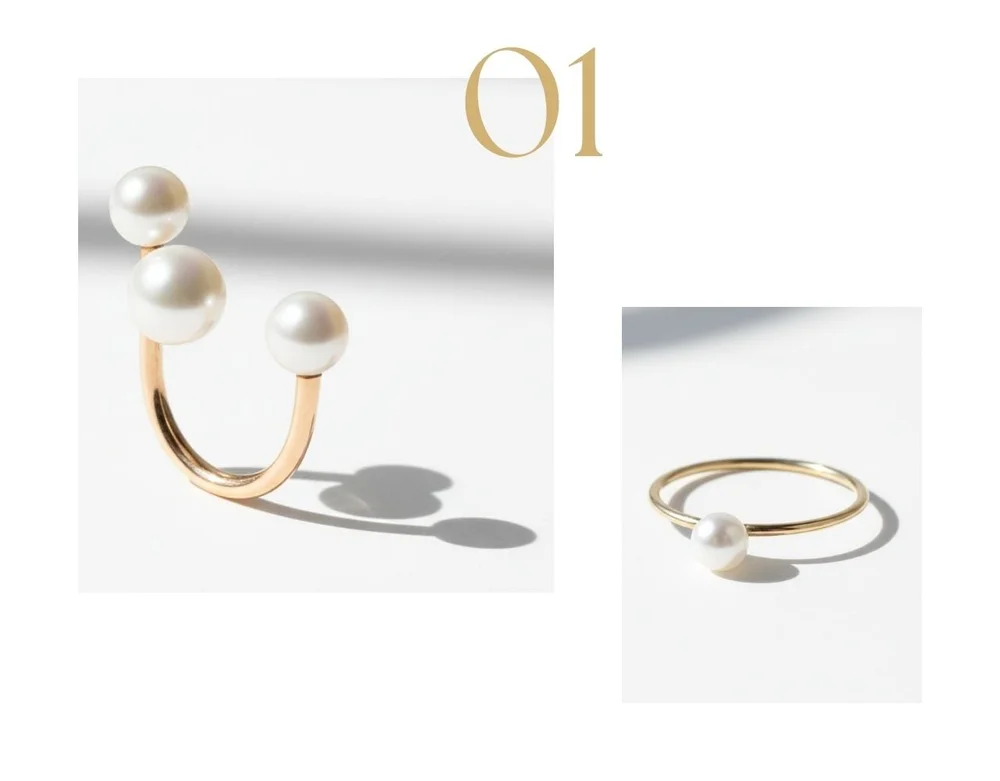
A single pearl held in gold, the simplest way to wear a little lustre every day. Each piece is hand-fabricated in solid 14k gold and 14k gold-filled by Andrea Li in Denver.
Keep It Simple or Make a Statement with Elevated Pearl Earring Designs
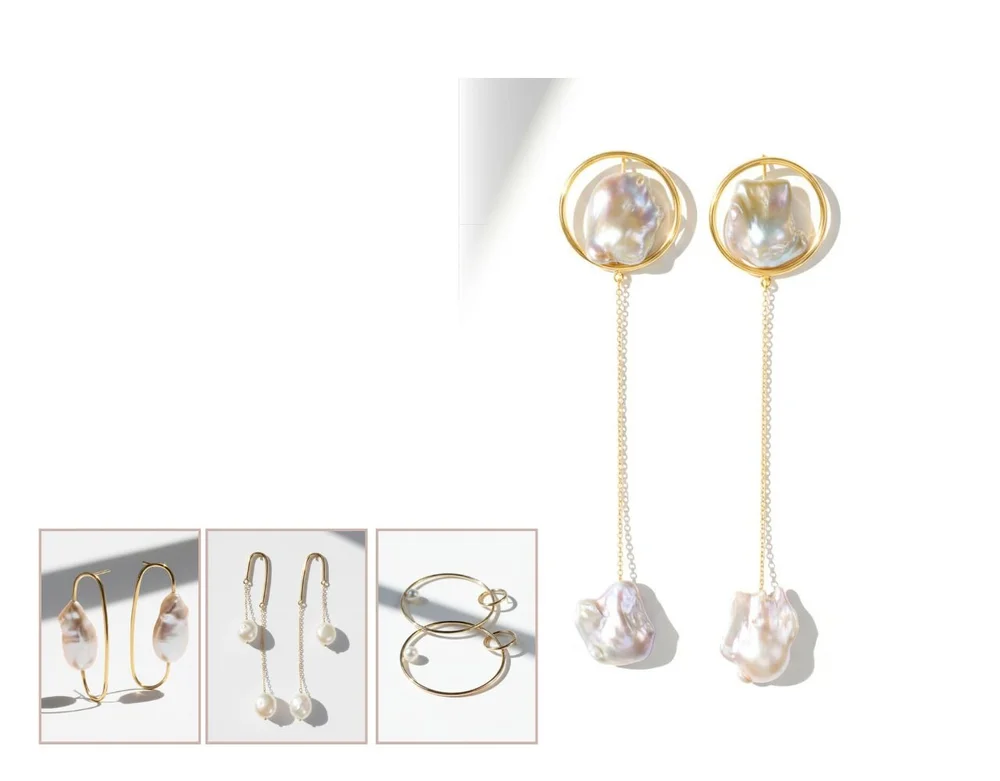
Pearls set to catch the light at the jaw, in cultured freshwater and grade A Akoya. Each piece is hand-fabricated in solid 14k gold and 14k gold-filled by Andrea Li in Denver.
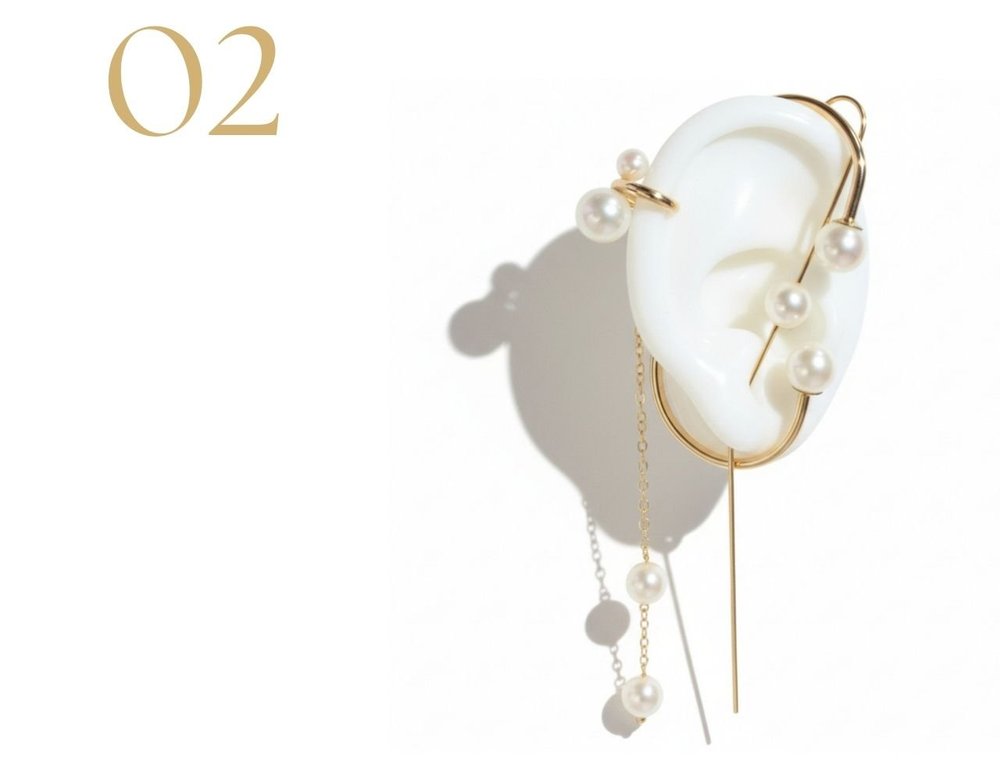
Your Next Favorite Ear Stack with Minimal Luxury Ear Cuffs. No piercings Required.
for the Statement Makers and Those Who Want an Everyday Edge
Everything for the ear, from pearl studs to drops and climbers, in cultured freshwater and grade A Akoya. Each piece is hand-fabricated in solid 14k gold and 14k gold-filled by Andrea Li in Denver.
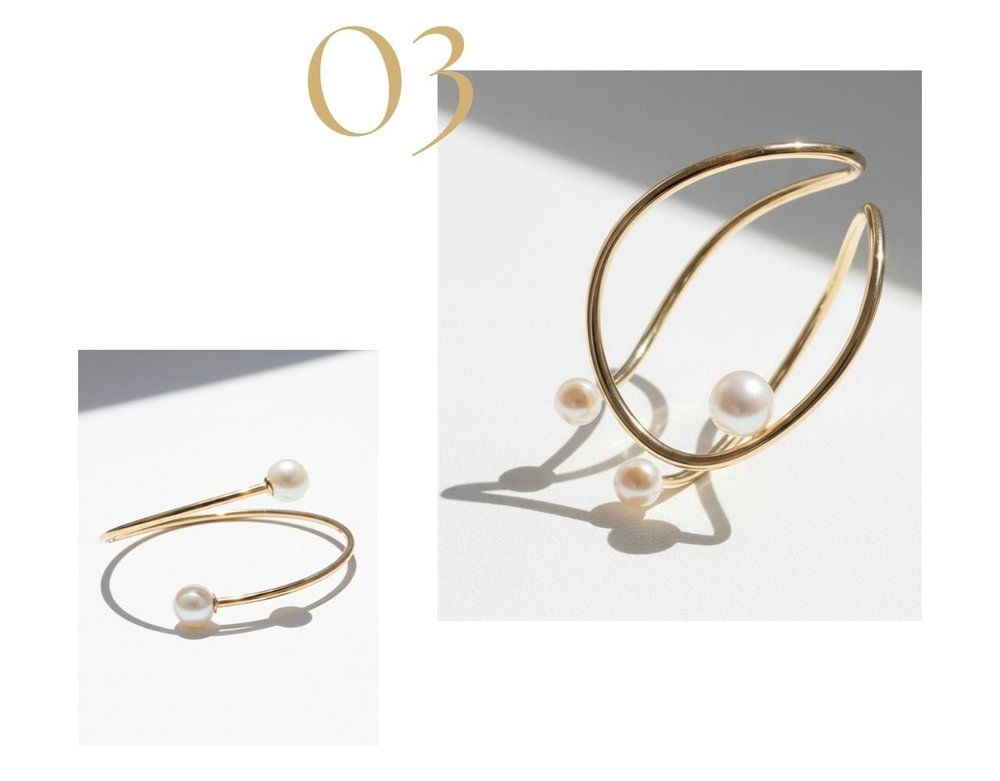
Pearls gathered at the wrist, baroque and round, each with its own quiet sheen. Each piece is hand-fabricated in solid 14k gold and 14k gold-filled by Andrea Li in Denver.
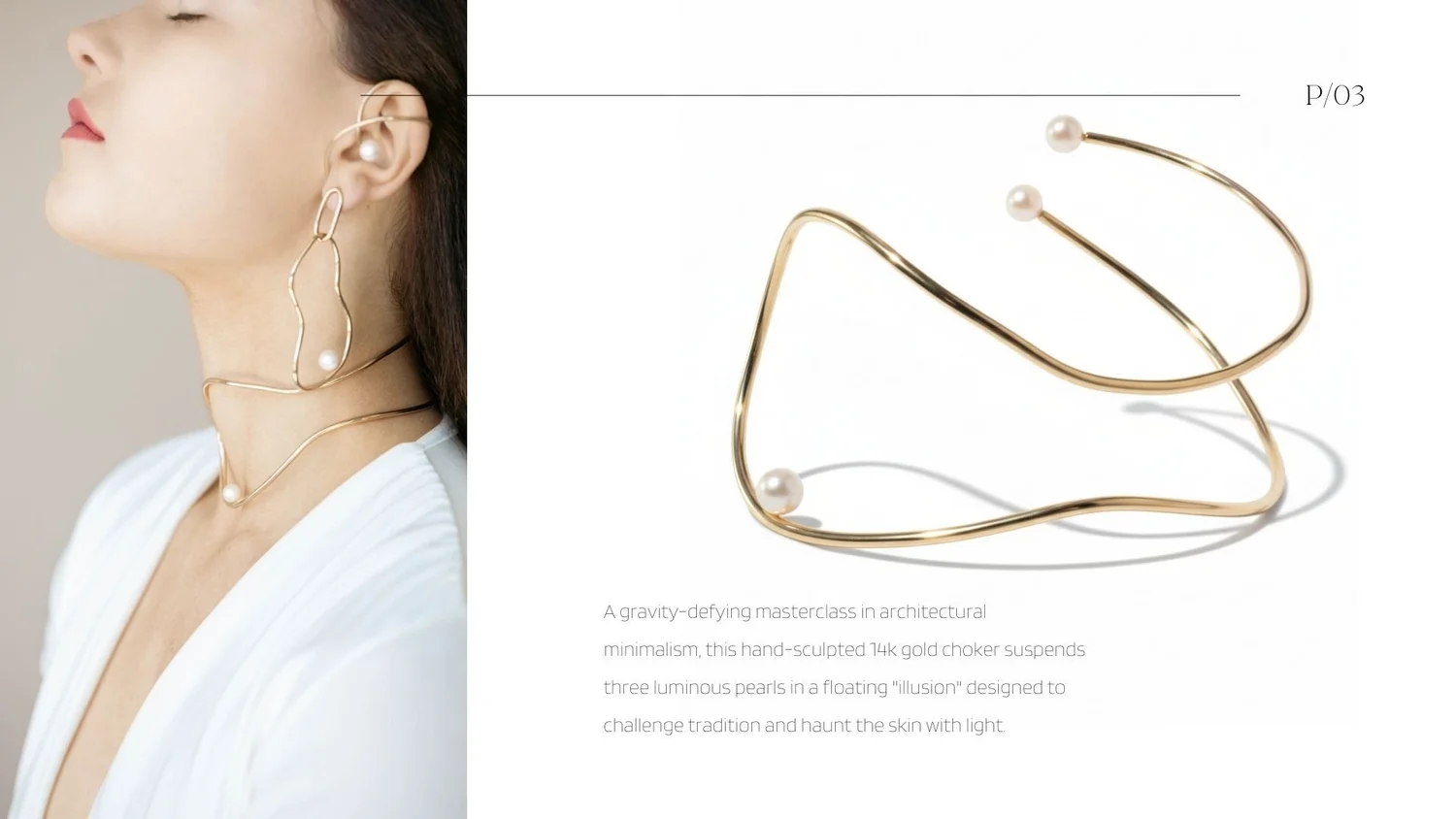
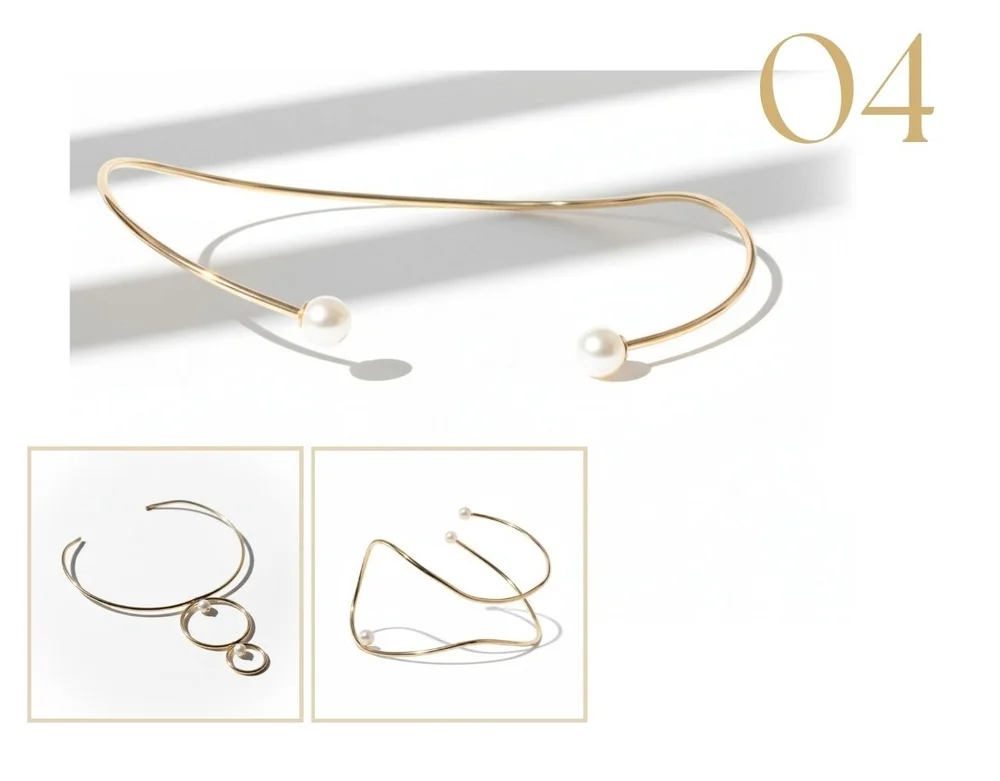
Pearls drawn close to the throat, freshwater and Akoya, modern and soft at once. Each piece is hand-fabricated in solid 14k gold and 14k gold-filled by Andrea Li in Denver.
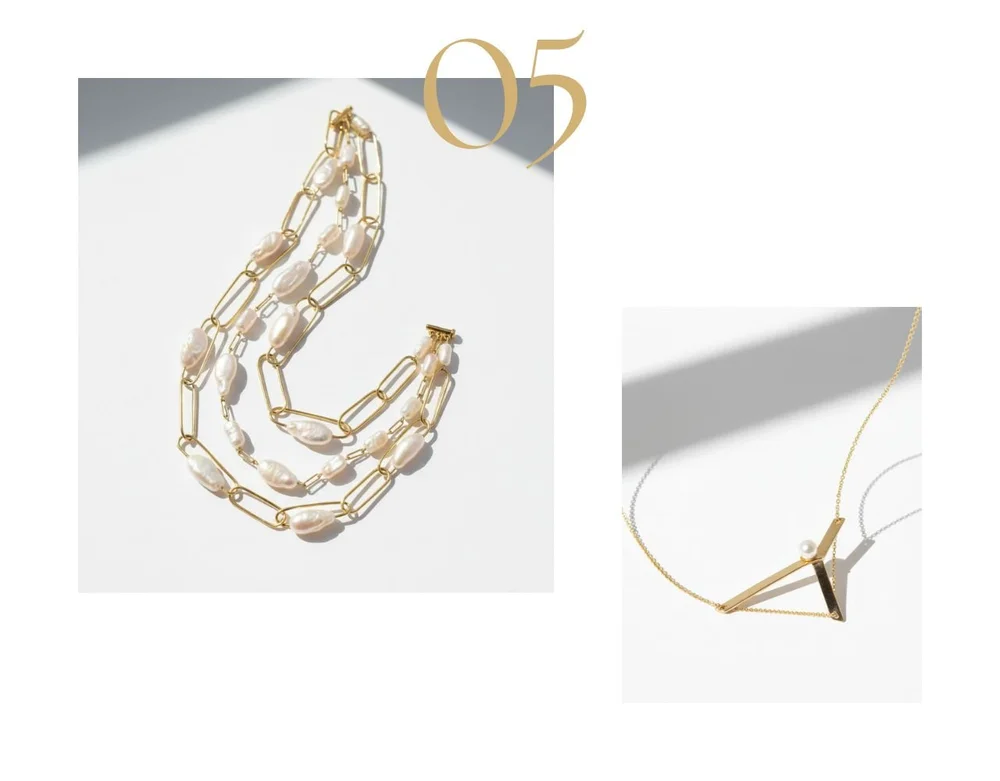
Lustre worn close, from a single drop to a full collar of freshwater and Akoya pearls. Each piece is hand-fabricated in solid 14k gold and 14k gold-filled by Andrea Li in Denver.
Soft, luminous, and endlessly classic, pearl is June’s birthstone and one of the most timeless gifts there is. Each piece is handmade and one-of-a-kind, sculpted by hand in my Denver studio.
When heirloom pearls become a piece she actually wears
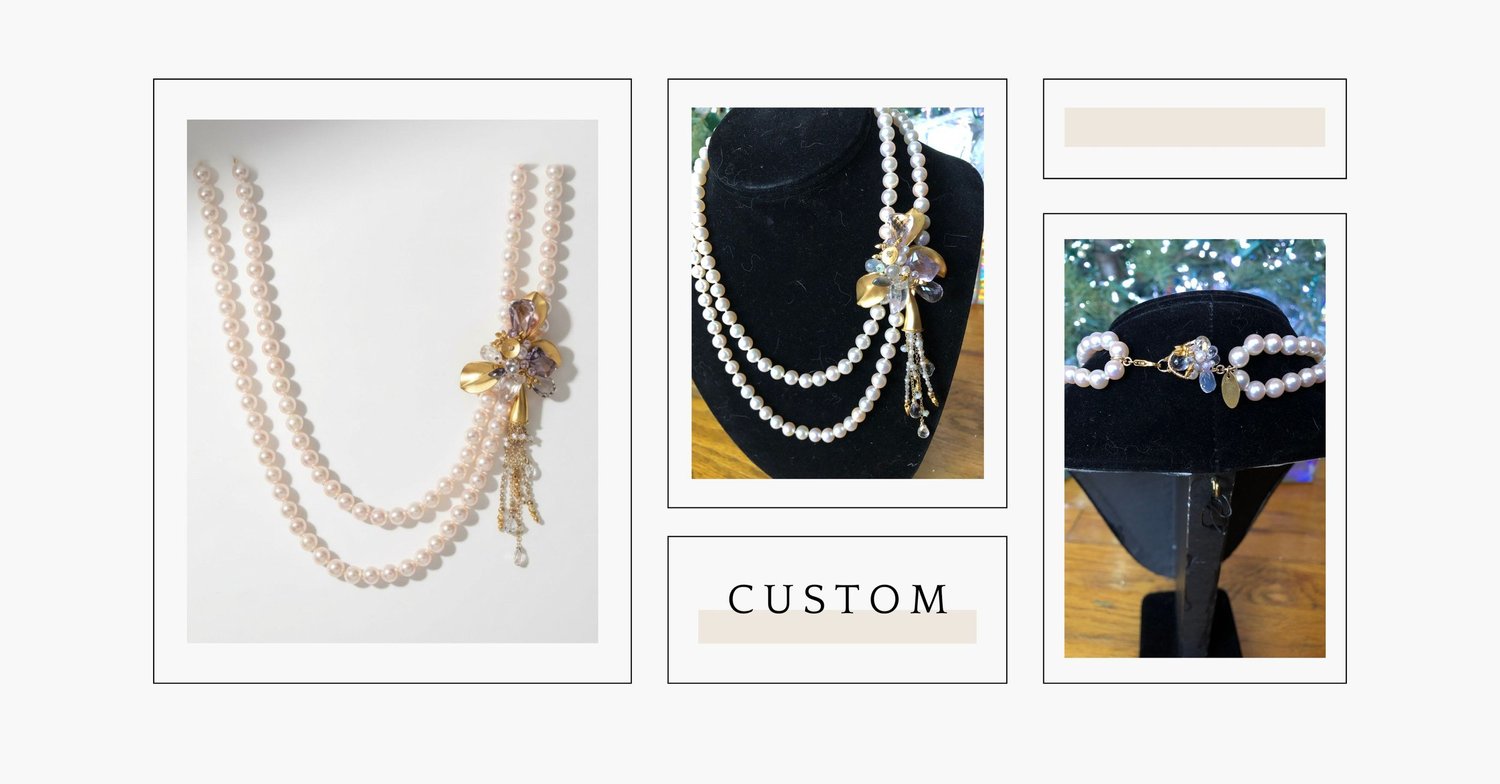
Carolyn's late mother-in-law gave her the choice of a full collection. She chose one strand of pearls. The doubled-strand commission, with its custom 24k gold vermeil cone clasp and asymmetrical opal-and-vermeil flourish, is what pearl-specialty work looks like at its most personal: a strand kept, never melted, integrated into a necklace she wears to gatherings of friends.
Saltwater types are named for where they are farmed. Nearly all freshwater pearls on the market come from China. Nearly every pearl sold today is cultured; natural pearls are rare.
Type
Oyster
Known for
Strand price, retail
Akoya
Pinctada fucata martensii, the Akoya oyster
The first pearl cultured commercially. Smaller, classically round, white and metallic shades.
$300 to $10,000 and above
South Sea
Pinctada maxima
Size, and exceptional golden color.
$1,000 to $100,000 and above
Tahitian
Pinctada margaritifera, the black lipped oyster
Exotic dark colors, and baroque shapes.
$500 to $25,000 and above
Freshwater
Freshwater mollusk, which can carry up to about 50 pearls at once
A vast range of shapes, sizes and colors. Round ones look almost identical to Akoya at a lower price.
$50 to $2,000
Saltwater pearls grow around a bead for roughly ten months to two years, with only one or two pearls per oyster at a time. That time, and so few pearls per oyster, is why they cost more.
The Tahitian nacre rule you have probably read is out of date. From 1998, French Polynesia required every exported Tahitian pearl to be X rayed and certified to at least 0.8mm of nacre per side, over 80 percent of the surface, and pearls that failed were destroyed. That requirement was scrapped in January 2017. All pearls may now be exported and are taxed regardless of quality, which is why few poor ones travel. Most pearl sites still print the rule as though it were current. It is worth knowing as a durability benchmark, roughly 1.0mm being a healthy depth, and not as a guarantee that anything on the market has passed a test.
Surface characteristics, and the three that are not flaws
Anything with organic origins carries imperfection. Most surface marks are cosmetic and lower the grade. Some are growth characteristics that do not, and one of them is evidence of quality.
Characteristic
What it is
Lowers the grade
Wrinkles
Uneven nacre formation. Expected, and often desirable, on pearls nucleated to be non round.
Yes, on round pearls
Spots
Slight variations of color.
Yes
Abrasions
Scratches or scuffs that interrupt the luster.
Yes
Dents and divots
Indentations in the nacre, varying in size.
Yes
Mottling
A light plating pattern formed inside the oyster.
No. It indicates a thick nacre layer.
Kobs and tips
Growth characteristics.
No, unless chipped, which affects durability.
Circles
A growth characteristic that gives a distinctive banded look.
No.
How rare a fine pearl actually is
Stage
Share
Nucleated oysters that survive to bear a pearl
About 50 percent
Of those, pearls that are marketable
About 20 percent
Nucleated oysters yielding fine gem quality
Fewer than 5 percent
The grade above AAA
Hanadama, certified by the Pearl Science Laboratory in Tokyo
These are figures the trade repeats rather than peer reviewed research, and pearl grading itself is not standardized, so treat every tier on every chart as one seller's opinion until you have looked at the pearl.
From the bench · Andrea Li
What a strand costs before it reaches a store
Every pearl chart online is written from the selling side. This is the buying side, from the trays at the Tucson gem shows.
Where I was buying
Price per strand
Lower tier shows, early on
Under $20, freshwater
Gated shows, as my eye improved
Roughly $100 to $600
My vendor now, at the AGTA show
Low hundreds into the low thousands
Ranges, not invoices. The point is the distance between the tiers, which is close to two orders of magnitude for something a chart would call the same product.
Where I stop matters as much as where I start, and the metal is what decides it. My work is demi fine: sterling silver, gold filled, gold vermeil, and solid 14k gold on occasion. Fine jewelry is solid 18k or 24k gold and platinum, and those metals are what carry a very expensive stone. A single pearl at several hundred to several thousand dollars belongs in a setting built to hold it for a lifetime, which is a different piece from the one I am making. So my ceiling is deliberate, not a budget. Grading charts show you every tier as though a buyer should climb to the top of it, and none of them tells you which tier suits the work in front of you.
Pearls are sold in bundles the trade calls bead lots. I have always called them shanks. A shank holds roughly 25 to 50 strands of small 2mm pearls, or around 15 strands at 10 to 11mm. I go through every strand in a shank before I choose one, looking for brilliance of luster, uniform shape, and consistent iridescence. What I will not buy is thin nacre: chalky patches, dull spots, irregular shapes and sizes.
The shows run in tiers, and the tier tells you what you are looking at. At the open end, vendors convert motel rooms into showrooms, free and no registration. Above that, tented shows you register for. At the top, the AGTA GemFair, indoors at the Tucson Convention Center. AGTA vets its buyers as well as its vendors: to get in I had to produce receipts proving my business had spent at least $10,000 in the previous year, along with my business license, cards and packaging. Once quality has been filtered that far upstream, the only thing left deciding what reaches my tray is taste.
One thing no chart will tell you. Pearls are less brittle than gemstones when you drill them, and more fragile than gemstones once they are set. A pearl is aragonite platelets bound by conchiolin, built like structural plywood rather than a rigid crystal, so a bit passes through without the stress that chips a briolette at its narrowest point. That same softness is why a finished pearl needs protecting in a way a sapphire never does.
What is the difference between freshwater and Akoya pearls?
Akoya pearls are saltwater cultured pearls known for a bright, sharp, almost mirror-like luster and a round shape, usually 6 to 8mm. Freshwater pearls are cultured in mussels and come in more shapes, including baroque, with a softer, satiny glow. Andrea Li works with both, plus baroque pearls, so every piece has its own character.
Are freshwater pearls cultured pearls, and are cultured pearls real?
Yes to both. Nearly every pearl sold today, freshwater or saltwater, is cultured: pearl farmers introduce the initial nucleus, and the mollusk does the actual layering of nacre, the same biological process that makes a natural pearl. Natural pearls form without human intervention and are rare. Every pearl Andrea Li sets is a genuine cultured pearl, freshwater or grade A Akoya, never imitation or plastic.
How is a pearl formed?
A foreign particle lodges in the soft tissue of a mollusk, an oyster or a mussel, and the mantle secretes nacre to isolate it. Thousands of microscopic layers of aragonite, bound by conchiolin, build up over time, and that is where the luster comes from. In a cultured pearl, a pearl farmer introduces the nucleus and nature still does the layering. Andrea sees those layers at the bench: when she widens a pearl's hole with a pearl drill bit, the nacre comes away as a fine white powder, like baking soda. The full story is in how pearls are cultivated.
What makes one pearl worth more than another?
Luster first, then nacre, orient, shape and source. At the Tucson gem shows Andrea inspects every single strand in a shank, looking for the most brilliant luster, uniform shapes and consistency of iridescence before she buys one, and she won't buy pearls where the nacre is thin and the pearls look chalky in places. Type sets the price range too: saltwater pearls cost more because each oyster grows only one or two at a time. Pearl grading is not standardized, so judge the pearl, not the chart. Her checklist is in how to tell a superior pearl.